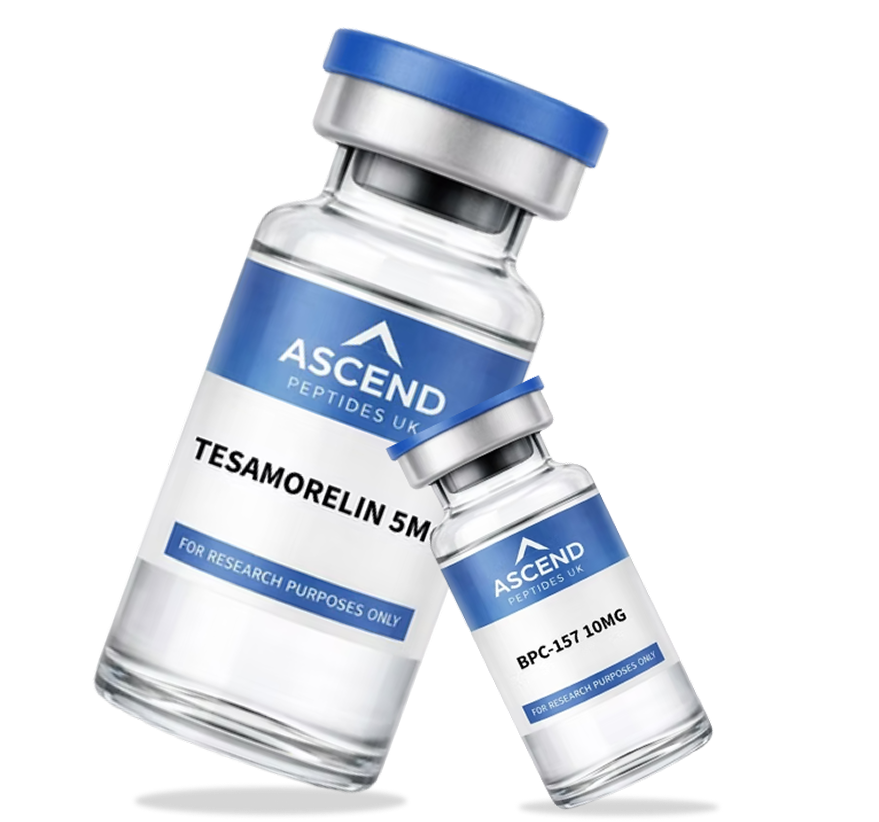

📥 FREE DOWNLOAD
For research professionals only — instant download, no payment required
Recovery Research Peptides UK — BPC-157, TB-500 and GHK-CU for UK Laboratory Research
Recovery research peptides UK suppliers serve a defined laboratory research category: synthetic compounds investigated in tissue-related research models, regenerative biology research, and cellular signalling research.
The compounds in this category have substantial published research literature, with substantial bodies of in-vitro scientific work covering angiogenesis pathways, growth factor interactions, fibroblast biology, actin sequestration, and copper-dependent cellular research.
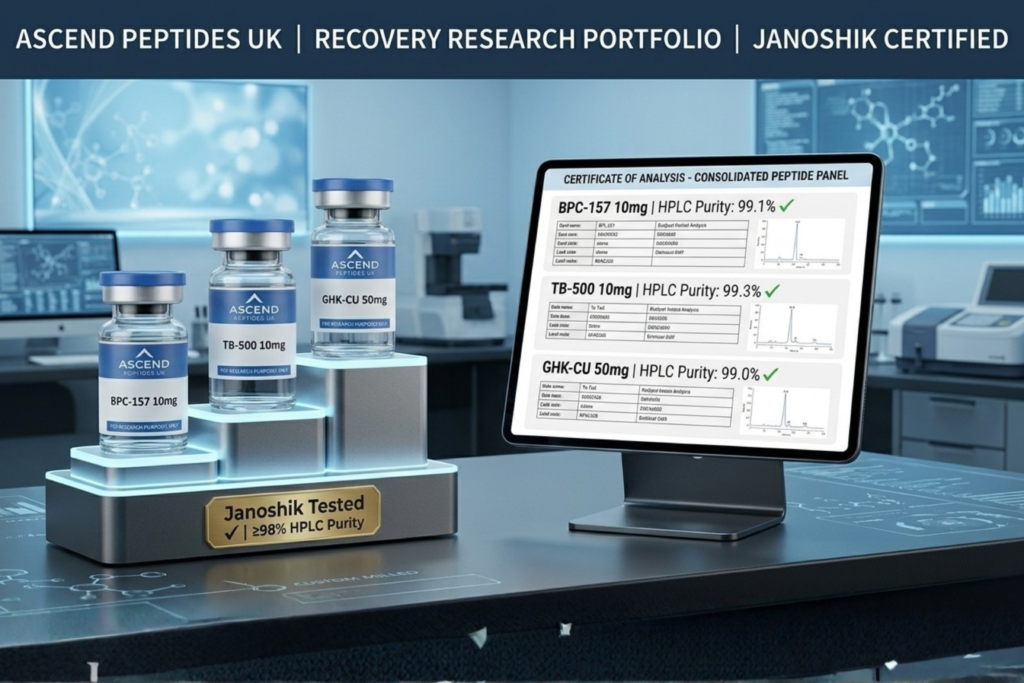
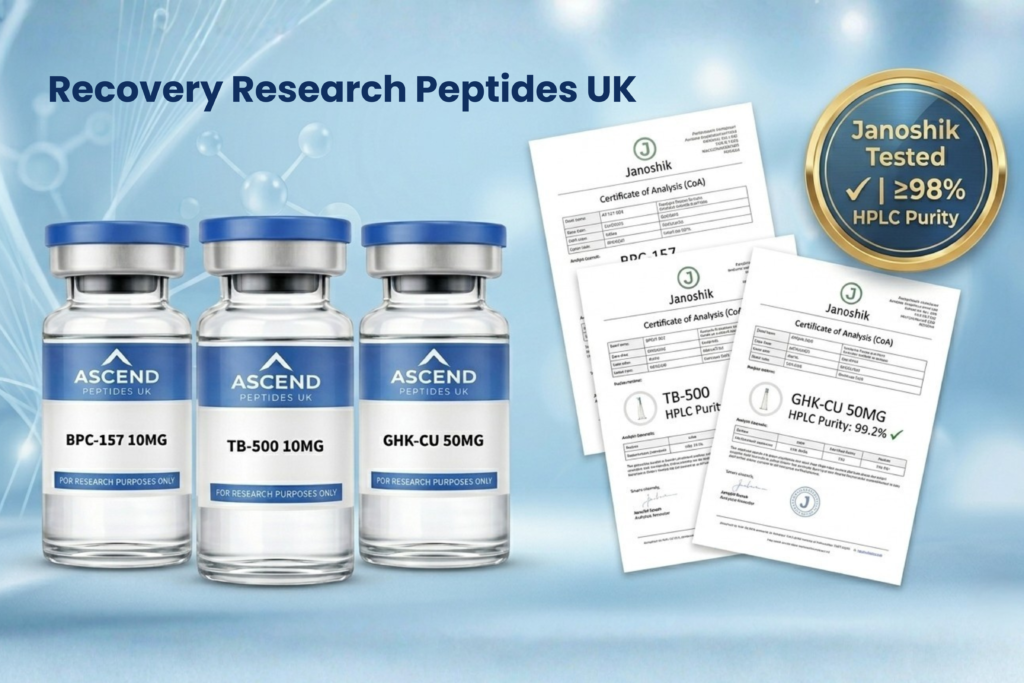
Ascend Peptides UK supplies the three principal recovery research peptides in the UK catalogue: BPC-157, TB-500, and GHK-CU. Every batch is HPLC-verified at ≥98% purity, LC-MS confirmed for molecular identity, and independently tested by Janoshik with a publicly verifiable Certificate of Analysis.
The three compounds cover two principal mechanistic classes within recovery research: pentadecapeptides derived from gastric protective protein research (BPC-157), thymosin family peptides involved in cellular and tissue research (TB-500), and copper tripeptide complexes (GHK-CU).
Researchers running multi-compound recovery research programmes can also order the Tri-Regenerative Complex — a single-supplier bundle containing all three compounds — or the Regenesis Complex, which pairs BPC-157 and TB-500 for combined research protocols. Recovery compounds are part of the broader catalogue of research peptides in the UK supplied by Ascend Peptides UK. To compare BPC-157, TB-500 and GHK-CU side by side by mechanism and format, use the Research Peptide Explorer.
📥 FREE DOWNLOAD
For research professionals only — instant download, no payment required
What Are Recovery Research Peptides?
Recovery research peptides are synthetic compounds used in laboratory research to study cellular and tissue biology pathways relevant to regenerative research models, fibroblast research, angiogenesis research, and copper-dependent cellular research. In the Ascend Peptides UK catalogue, the recovery research peptide category covers three compounds, each representing a distinct mechanistic class:
- Pentadecapeptide research compounds — synthetic peptides derived from gastric protective protein research. BPC-157 (Body Protection Compound 157) is the principal research compound in this class — a 15-amino acid stable gastric pentadecapeptide widely studied in cellular and tissue research models.
- Thymosin family research peptides — peptides derived from the thymosin protein family. TB-500 is a synthetic fragment of Thymosin Beta-4 (TB-4) with extensive published literature on actin sequestration and cellular migration research.
- Copper tripeptide complex compounds — GHK-CU (glycyl-histidyl-lysine copper) is a copper-bound tripeptide with one of the most substantial published research literatures across both skin biology research and tissue research models.
The mechanistic distinctions matter for experimental design. BPC-157 and TB-500 are the two most studied recovery research compounds and are frequently used together in research protocols — their distinct mechanisms (pentadecapeptide signalling vs actin sequestration) make them complementary research variables rather than redundant compounds.
BPC-157 Research Peptide UK — Pentadecapeptide Research Compound
BPC-157 (Body Protection Compound 157) is a synthetic 15-amino acid peptide derived from a partial sequence of the human gastric protective protein. Molecular formula C62H98N16O22, molecular weight approximately 1419.55 Da. Sequence: Gly-Glu-Pro-Pro-Pro-Gly-Lys-Pro-Ala-Asp-Asp-Ala-Gly-Leu-Val.[1] BPC-157 is one of the most extensively studied research peptides in published cellular and tissue research literature, with documented research applications in angiogenesis research, fibroblast biology research, growth factor interaction research, and gastrointestinal cellular research models.
Research Applications of BPC-157
In UK laboratory research, BPC-157 is the standard research compound for pentadecapeptide signalling research. Documented in-vitro research applications include angiogenic factor expression studies in endothelial cell models, fibroblast migration research, collagen gene expression research, and growth hormone receptor interaction studies.[2] BPC-157 is the most published research compound in its mechanistic class and is frequently studied alongside TB-500 in combined recovery research protocols.
BPC-157 is supplied by Ascend Peptides UK at £30 per vial, with HPLC purity verified at ≥98% by Janoshik laboratory, LC-MS molecular identity confirmation, and a batch-specific Certificate of Analysis available pre-purchase. Reconstitute with BP-grade bacteriostatic water and store at −20°C. Browse the BPC-157 product page for batch documentation and same-day UK dispatch.
TB-500 Research Peptide UK — Thymosin Beta-4 Fragment
TB-500 is a synthetic peptide fragment derived from the parent protein Thymosin Beta-4 (TB-4). It corresponds to residues 17–23 of TB-4 (Ac-LKKTETQ), a sequence containing the hexapeptide actin-binding motif (residues 17–22); in full-length TB-4, the N-terminal region (residues 1–16) also takes part in actin binding.[5] Molecular formula C38H68N10O14, molecular weight approximately 889.02 Da. TB-500 is the second most studied recovery research peptide after BPC-157 and is the standard research compound for actin-binding pathway research in cellular biology models.
Research Applications of TB-500
Research applications of TB-500 in published UK and international literature include actin sequestration research, cellular migration research, vascular endothelial cell research, and fibroblast activity research in in-vitro cellular models.
TB-500 is the standard research compound when the experimental focus is the actin-binding pathway component of recovery biology research. The compound is structurally and mechanistically distinct from BPC-157; they share only the broad recovery research category, not the underlying mechanism, which makes them complementary research variables rather than redundant compounds.
TB-500 is supplied by Ascend Peptides UK at £35 per vial, with the same Janoshik documentation standard applied across the recovery range. Browse the TB-500 product page for batch documentation, or order the Regenesis Complex (BPC-157 10mg + TB-500 10mg, £55) for combined research protocols.
BPC-157 + TB-500 — Combined Research Protocols
BPC-157 and TB-500 are the most frequently combined compounds in published recovery research peptide literature. The two compounds act through mechanistically distinct pathways (pentadecapeptide signalling vs actin sequestration) and can function as independent variables within the same in-vitro cellular research protocol. Both are stocked together by Ascend Peptides UK with matched Certificate of Analysis documentation. The Regenesis Complex bundle pairs the two compounds at a reduced single-bundle price.
GHK-CU Research Peptide UK — Copper Tripeptide Research Compound
GHK-CU (glycyl-histidyl-lysine copper) is a copper-bound tripeptide complex. Molecular formula C14H22CuN6O4, molecular weight approximately 401.93 Da. The compound consists of the three-amino acid sequence Gly-His-Lys bound to a divalent copper ion (Cu²⁺); in solution the copper is held by three nitrogen atoms of the peptide — the N-terminal amine, a backbone amide nitrogen and the histidine imidazole nitrogen.[4]
GHK-CU is one of the most extensively characterised research peptides in published literature, with substantial research bodies across both skin biology research models and tissue research models, making it a relevant compound in both the skin and recovery research categories.
Research Applications of GHK-CU
In recovery research model literature, GHK-CU has been studied for its role in fibroblast research, collagen gene expression research, copper-dependent enzyme research, and antioxidant pathway research in cellular models.[3] GHK-CU is the standard research compound when the experimental focus is the copper-dependent component of cellular and tissue research biology. It is structurally and mechanistically distinct from both BPC-157 and TB-500, making it a third independent variable for researchers building multi-compound recovery research programmes.
GHK-CU is supplied by Ascend Peptides UK in 50mg and 100mg vials, with a published Janoshik certificate for the 100mg format. For researchers running combined three-compound research protocols, the Tri-Regenerative Complex bundle pairs BPC-157, TB-500 and GHK-CU at a reduced single-bundle price of £85 — the most comprehensive recovery research bundle available from Ascend Peptides UK.
References
- PubChem. BPC-157 (CID 9941957).
- Chang C-H, Tsai W-C, Hsu Y-H, Pang J-HS. Pentadecapeptide BPC 157 Enhances the Growth Hormone Receptor Expression in Tendon Fibroblasts. Molecules. 2014;19(11):19066–19077.
- Pickart L, Margolina A. Regenerative and Protective Actions of the GHK-Cu Peptide in the Light of the New Gene Data. Int J Mol Sci. 2018;19(7):1987.
- Hureau C, Eury H, Guillot R, et al. X-ray and solution structures of Cu(II) GHK and Cu(II) DAHK complexes: influence on their redox properties. Chem Eur J. 2011;17(36):10151–10160.
- Van Troys M, Dewitte D, Goethals M, Carlier MF, Vandekerckhove J, Ampe C. The actin binding site of thymosin beta 4 mapped by mutational analysis. EMBO J. 1996;15(2):201–210.
Recovery Peptide Supplier UK — How Ascend Peptides UK Documents Every Batch
When sourcing recovery research peptides, UK suppliers must meet four documentation standards that distinguish a verified supplier from an unverified one. These standards are particularly important in the recovery category because BPC-157 and TB-500 are commonly encountered products in the UK research peptide market, making documentation verification important. See our guide to choosing a UK peptide supplier for the full evaluation criteria., making documentation verification important. Supplier quality variation is substantial, and unverified compounds may show variability in independent purity testing. The complete documentation framework is set out on our batch verification page.
|
Documentation Standard |
Industry Norm |
Ascend Peptides UK |
|---|---|---|
|
HPLC purity verification |
Self-reported by the supplier |
Independent HPLC by Janoshik laboratory, ≥98% verified |
|
Molecular identity |
Often not tested |
LC-MS confirmation on every batch |
|
Certificate of Analysis |
Generic or unavailable |
Batch-specific, publicly verifiable, pre-purchase |
|
Storage and dispatch |
3–7 working days |
Same-day UK dispatch before 3pm UK time, −20°C cold chain |
Every recovery research peptide supplied by Ascend Peptides UK carries a publicly verifiable Janoshik Certificate of Analysis that confirms both HPLC purity (≥98%) and LC-MS molecular identity. The full batch documentation archive is available on the Certificates of Analysis page, and the complete quality control workflow is set out on our ” How We Test Peptides ” page.
Before You Order — Free Research Buyer Starter Pack
The recovery research peptide category, particularly BPC-157 and TB-500, has one of the widest supplier quality variations in the UK research peptide market. Before placing an order for any recovery research peptide, UK research buyers should review the supplier evaluation checklist.
The Research Buyer Starter Pack is a free download from Ascend Peptides UK covering exactly what to verify before ordering, including how to read a Certificate of Analysis, what HPLC and LC-MS results actually confirm, and how to evaluate a UK peptide supplier against measurable standards.
📥 FREE DOWNLOAD
Research Buyer Starter Pack
A practical guide for UK research buyers. What to check before ordering a metabolic research peptide. What documentation to request from any supplier? What storage and dispatch standards to expect.
Inside the checklist:
Inside the pack:
✓ What “research-use only” means under UK regulation
✓ How to evaluate a UK research peptide supplier — 9-point checklist
✓ What documentation to request before purchase (CoA, HPLC, LC-MS)
✓ What storage and reconstitution standards to verify
✓ Pre-order buyer checklist — 16 items to confirm
✓ How to spot a low-quality metabolic peptide supplier — 7 warning signs
For research professionals only — instant download, no payment required
Buy Recovery Research Peptides UK — Documentation Buyer Framework
UK researchers buying recovery research peptides should apply the same documentation framework to every supplier, every batch, and every order. The framework has four steps:
Ascend Peptides UK meets all four standards on every batch of every recovery research peptide supplied. The Janoshik Certificate of Analysis is publicly accessible, the HPLC purity figure is stated on every batch, the LC-MS molecular identity is reported, and all compounds are dispatched same-day before 3pm UK time in temperature-controlled packaging.
Order Recovery Research Peptides UK — Same-Day Dispatch
The Ascend Peptides UK recovery research peptide range is available for direct order with same-day UK dispatch before 3pm UK time. Orders over £75 qualify for a free 10ml bacteriostatic water bonus.
For pentadecapeptide research, BPC-157 is the widely researched compound, a 15-amino acid gastric pentadecapeptide supplied at £30 per vial with HPLC purity verified at ≥98% and Janoshik’s third-party Certificate of Analysis on every batch. BPC-157 is the appropriate research peptide for angiogenesis research, fibroblast biology research, and cellular signalling research in in-vitro models.
For thymosin family recovery research, TB-500 is the standard research compound, a 7-amino acid synthetic fragment of Thymosin Beta-4 (Ac-LKKTETQ), supplied at £35 per vial with the same documentation standard applied across the Ascend Peptides UK recovery range.
TB-500 is the appropriate research peptide for actin sequestration research and cellular migration research. Researchers running the most common combined recovery research protocol, BPC-157 plus TB-500, can order the Regenesis Complex bundle, which pairs both compounds at the reduced single-bundle price of £55.
For copper tripeptide research, GHK-CU is the standard research compound, a glycyl-histidyl-lysine copper complex supplied in 50mg and 100mg vials (current prices on the product pages), relevant to both recovery research models and skin biology research.
Researchers building the most comprehensive three-compound recovery research programme can order the Tri-Regenerative Complex bundle BPC-157, TB-500 and GHK-CU together at £85, the most comprehensive recovery bundle in the Ascend Peptides UK catalogue.
Browse the complete range on the Ascend Peptides UK shop collection, or review the documentation transparency standard applied to every batch on the batch verification page. All orders placed before 3pm UK time are dispatched same-day via Royal Mail Tracked 24 to UK research addresses.
Recovery Research Peptides UK — Frequently Asked Questions
What are recovery research peptides?
What is the difference between BPC-157 and TB-500?
Can I order BPC-157, TB-500 and GHK-CU together?
What is GHK-CU, and why is it studied in recovery research?
What is the WADA status of recovery research peptides?
How should recovery research peptides be stored?
What is the MHRA status of recovery research peptides in the UK?
Why UK Researchers Source Recovery Research Peptides from Ascend Peptides UK
- ≥98% HPLC purity on every batch — independently verified by Janoshik laboratory
- LC-MS molecular identity confirmation — critical for heavily counterfeited compounds like BPC-157 and TB-500
- Publicly verifiable Certificate of Analysis — batch-specific, available pre-purchase
- Same-day UK dispatch before 3pm UK time — Royal Mail Tracked 24
- FREE 10ml bacteriostatic water on orders over £75
- Bundle pricing — Regenesis Complex (£55) and Tri-Regenerative Complex (£85)
- All three recovery compounds stocked together — single-supplier batch matching
RESEARCH USE ONLY
All products supplied by Ascend Peptides UK are intended strictly for in-vitro laboratory research purposes only. Compounds are not licensed as medicinal products under the UK Human Medicines Regulations 2012 and are not for human or veterinary use. No dosing guidelines are provided. Products are supplied to qualified research professionals only.
📥 FREE DOWNLOAD
For research professionals only — instant download, no payment required