
PRODUCTS SOLD BY ASCEND PEPTIDES ARE INTENDED FOR RESEARCH USE ONLY.
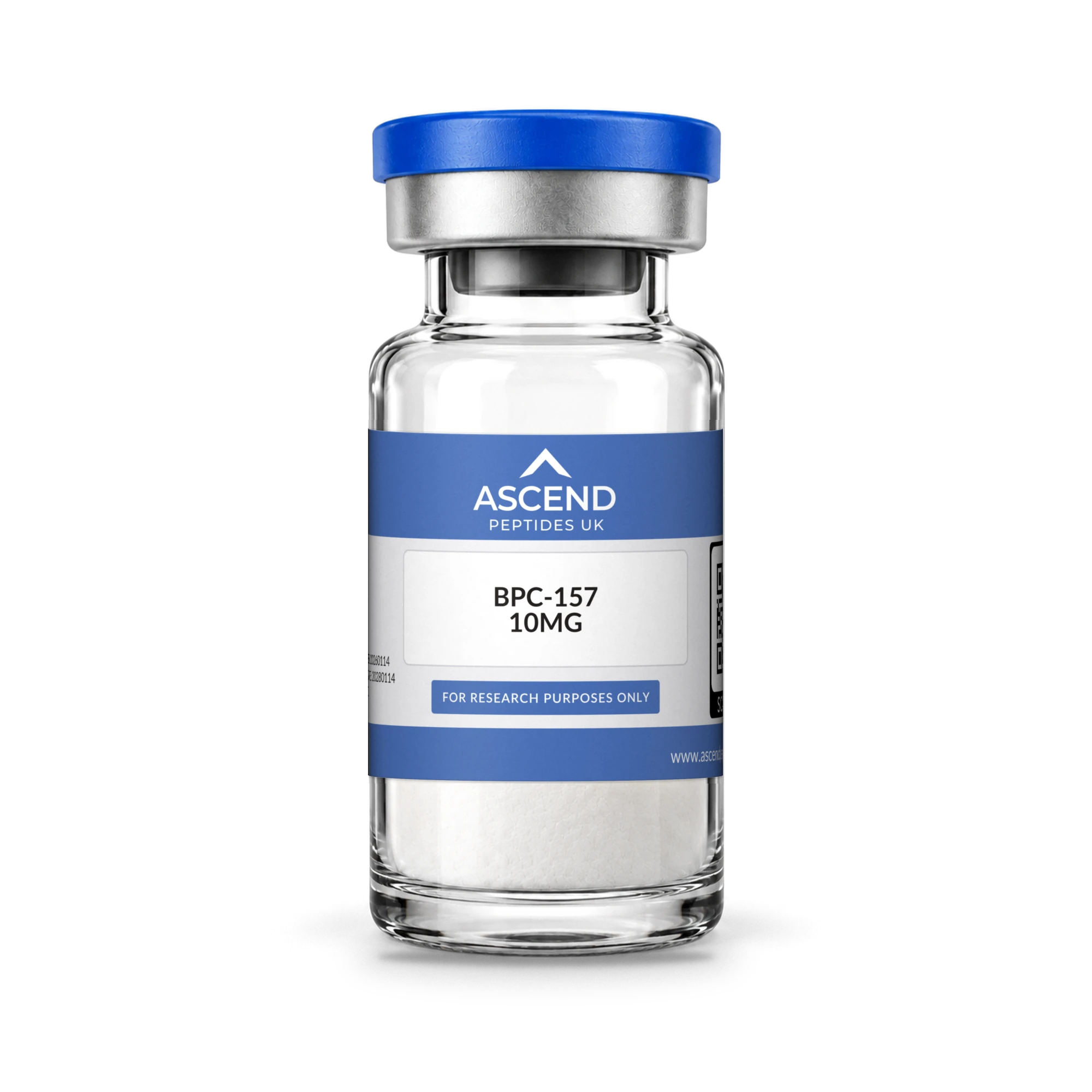
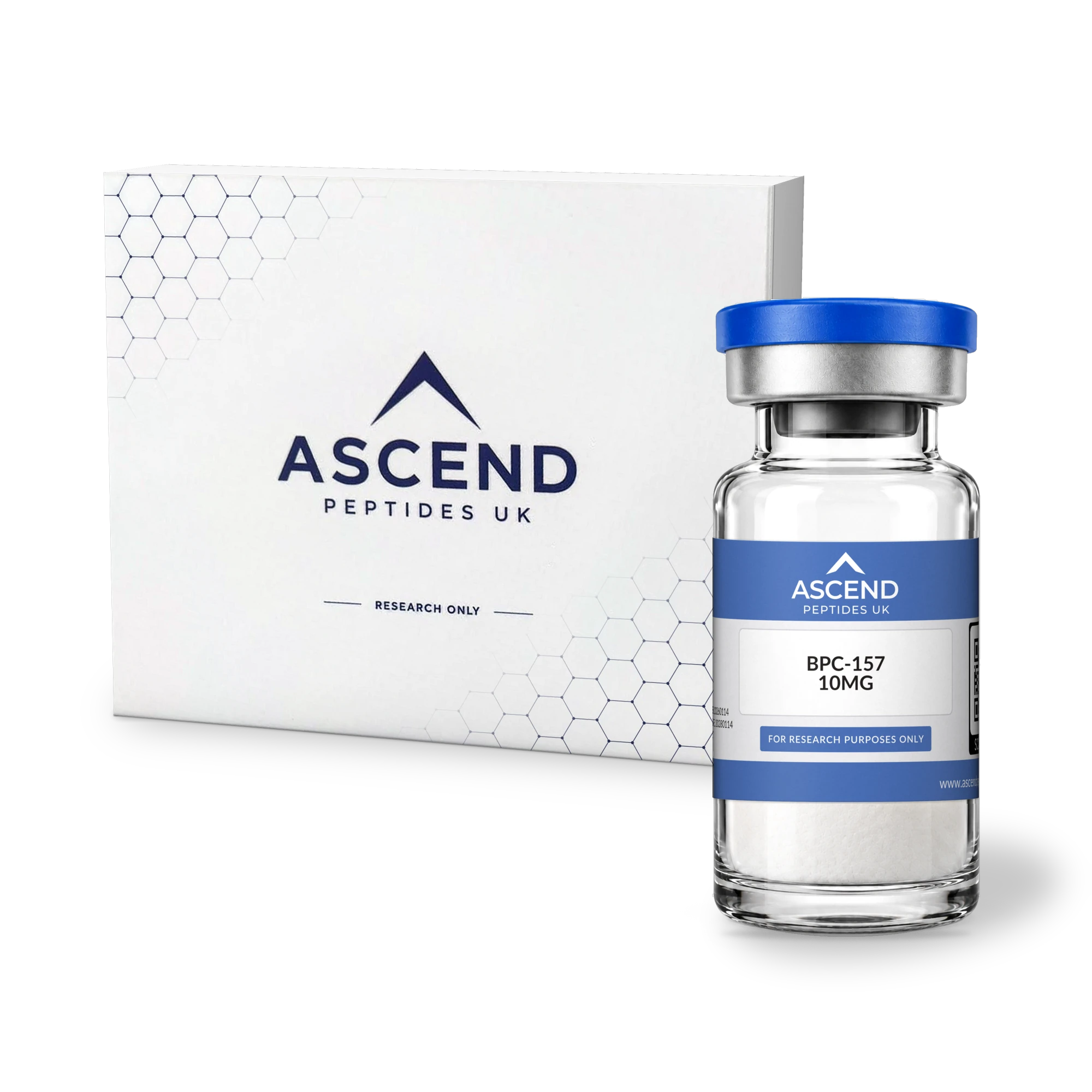
Laboratory research material
BPC-157 10mg UK Research Peptide (also written BPC157) is a synthetic 15-amino-acid peptide derived from a sequence of a gastric juice protein, studied in preclinical research on nitric oxide signalling, VEGF pathways and gut biology. Janoshik report published for a tested batch. Same working-day UK dispatch on in-stock orders before 3pm (Mon–Fri). For in-vitro research use only.
Research guides: What is BPC-157? · BPC-157 10mg laboratory guide · Bundle: BPC-157 10mg + TB-500 10mg
Safety Information: Not intended for human or veterinary use. Use appropriate laboratory safety procedures when handling.
BPC-157 10mg should only be used in laboratory settings by qualified personnel.
Ensure all experimental procedures comply with local and institutional regulations.
This peptide is supplied for research and scientific study purposes only.
BPC-157 10 mg:
View Janoshik report #125384 (tested sample: BPC157 10mg)
This report covers one tested sample. It does not establish that current stock comes from the same batch.
BPC-157 10mg UK Research Peptide
BPC-157 (Body Protection Compound 157) is a synthetic 15-amino-acid peptide based on a partial sequence of a human gastric juice protein, supplied by Ascend Peptides UK for in-vitro laboratory research. Each vial contains a nominal 10mg of lyophilised BPC-157. A Janoshik report is published for one tested batch.
Published reference properties, not analytical results for the supplied vial: BPC-157 (free peptide) is a 15-amino-acid peptide with the sequence GEPPPGKPADDAGLV, the molecular formula C62H98N16O22 and a molecular weight of approximately 1,419.5 g/mol (PubChem CID 9941957; CAS 137525-51-0). An acetate or other salt form has a different formula weight, and the published certificate does not state the salt form of the supplied material. Its compact 15-amino-acid structure has attracted interest across a range of preclinical research fields, particularly those examining gastrointestinal biology, cellular signalling, angiogenesis and tissue-related laboratory models.
Published preclinical research has examined BPC-157 in experimental systems involving nitric oxide signalling, nitric oxide synthase activity, vascular endothelial growth factor pathways, fibroblast migration, inflammatory signalling and gastrointestinal mucosal biology (for example, tendon fibroblast outgrowth, survival and migration in Chang et al., 2011, and angiogenesis assays with VEGFR2 activation in Hsieh et al., 2017). These findings are largely derived from animal, cellular and other preclinical research models. They must not be interpreted as evidence of safety, effectiveness or therapeutic benefit in humans. Human evidence is very limited: a 2025 systematic review of BPC-157 in orthopaedic sports medicine identified 35 preclinical studies and one small human study (a retrospective series of 12 patients), and found no human safety data (Vasireddi et al., 2025). No specific receptor for BPC-157 has been established.
The 10mg format may suit analytical investigations, assay development, concentration-response studies and multi-arm laboratory protocols where sufficient material from a single vial is important for experimental consistency. The 10mg format can also support repeated analytical measurements or extended research programmes while reducing the variability that may arise from using several separate batches.
BPC-157 and TB-500 are sometimes examined within related tissue and cellular research fields, although their proposed laboratory mechanisms are distinct. BPC-157 has primarily been studied in relation to nitric oxide and vascular signalling pathways, while TB-500 is studied as a fragment of the actin-binding region of thymosin β4. They are different compounds and are not interchangeable; published studies combining them are few, so combined designs should not assume independent or additive effects.
BPC-157 has also been discussed alongside GHK-CU in cellular and extracellular-matrix research. BPC-157 is generally examined in nitric oxide, angiogenesis and migration-related models, whereas GHK-CU is a copper-binding peptide studied in relation to extracellular-matrix signalling and cellular remodelling. Compound selection should always be based on the specific aims, controls and analytical requirements of the proposed laboratory protocol.
Ascend Peptides UK publishes an independent Janoshik report for a tested batch of BPC-157 10mg. The batch reference, test date and results are given in the report itself, linked from the Certificate of Analysis section of this page and from the Certificates of Analysis page, so the testing record can be updated when stock changes without rewriting this description. Measured content and purity are separate results, and neither describes every vial in current stock. The report does not state the analytical method and does not separately report a mass-spectrometry identity result, the salt form, or sterility or endotoxin testing. View the BPC-157 10mg report on the Certificates of Analysis page.
Each published Certificate of Analysis identifies the batch that was tested and applies only to that batch; it does not by itself establish that a supplied vial comes from that batch. Analytical documentation should be reviewed before the material is introduced into any experimental system. Purity percentage alone does not establish molecular identity; the published certificate reports measured content and purity, and identity data such as mass spectrometry is not separately reported on it.
BPC-157 10mg is supplied as a sealed lyophilised powder. Keep the vial protected from excessive heat, direct light and moisture. Storage and laboratory handling should follow the conditions printed on the current product label. The published certificate does not state storage conditions; supplier storage information is being confirmed. Researchers should use suitable protective equipment, sterile laboratory materials where required and an approved institutional handling procedure.
Any solvent selection, preparation method, concentration range or analytical protocol should be determined by an appropriately trained researcher according to the requirements of the specific in-vitro assay. Experimental records should document the product name, batch number, date received, storage conditions and all preparation steps to support reproducibility.
For further scientific background, researchers can consult What Is BPC-157? (structure, sequence and research evidence) and the BPC-157 10mg laboratory guide, which grades how consistently each reported pathway has been replicated, both published by Ascend Peptides UK. Information about analytical verification, Certificates of Analysis and independent laboratory testing is available through the Ascend Peptides UK quality-control and batch-verification pages.
BPC-157 is prohibited at all times under category S0, Non-Approved Substances, of the World Anti-Doping Agency Prohibited List.
BPC-157 10mg is supplied strictly for in-vitro laboratory research and analytical use. It is not for human consumption, veterinary use, therapeutic use, diagnostic use or clinical administration. It is not an MHRA-licensed medicine and is not intended to diagnose, treat, cure or prevent any disease. Purchase and handling are restricted to appropriately trained individuals operating within a suitable research environment.
Other laboratory research materials supplied by Ascend Peptides UK.
UK same working-day dispatch – Secure payment options –
Laboratory research only
© 2026 by Ascend Peptides Uk.
All products sold by Ascend Peptides UK are intended strictly for laboratory research purposes only. Not intended for human consumption or therapeutic use of any kind.
Per product, applied automatically in your bagAuto-applied in your bag
Ordering more? Contact us for larger-volume pricing →