
PRODUCTS SOLD BY ASCEND PEPTIDES ARE INTENDED FOR RESEARCH USE ONLY.
Laboratory research material
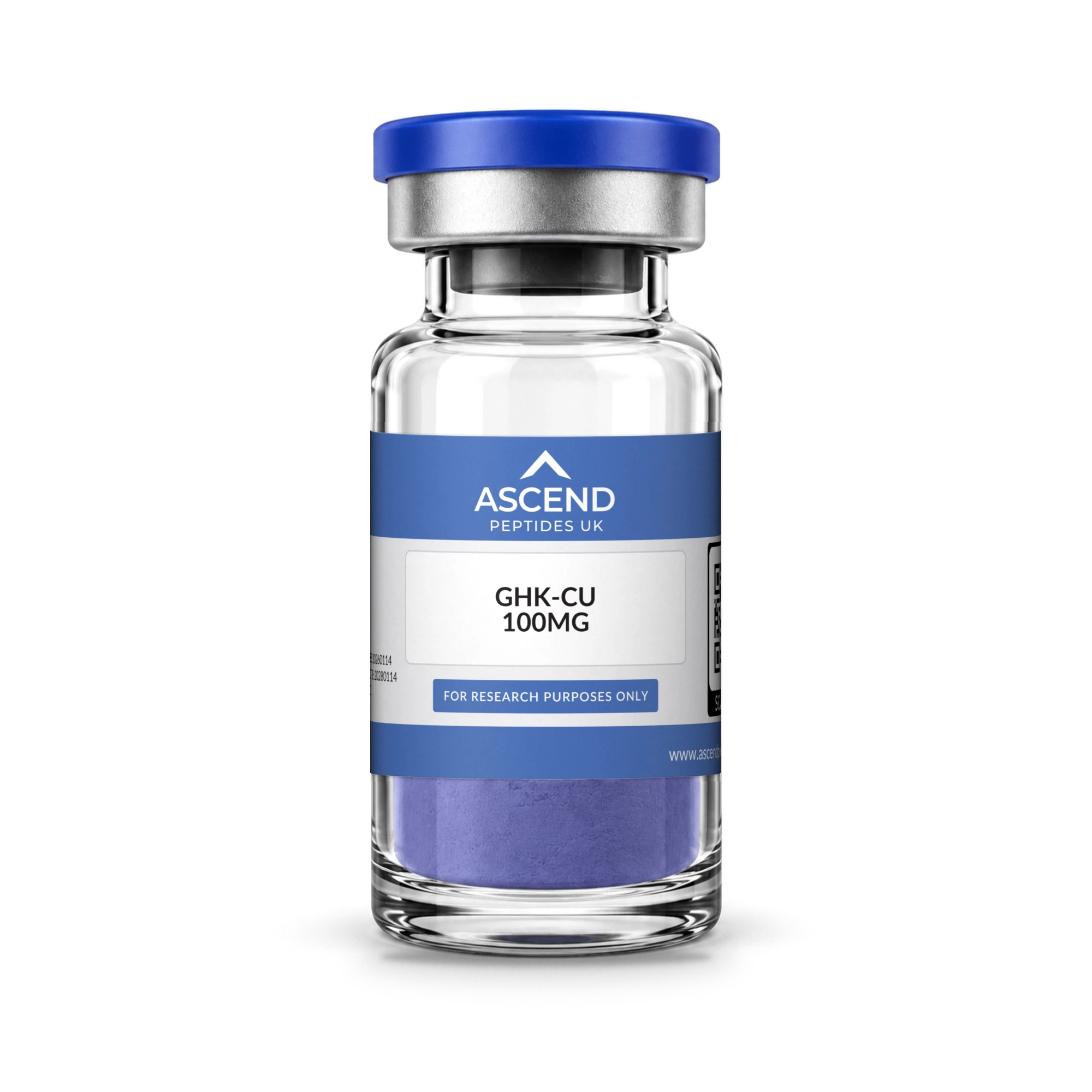
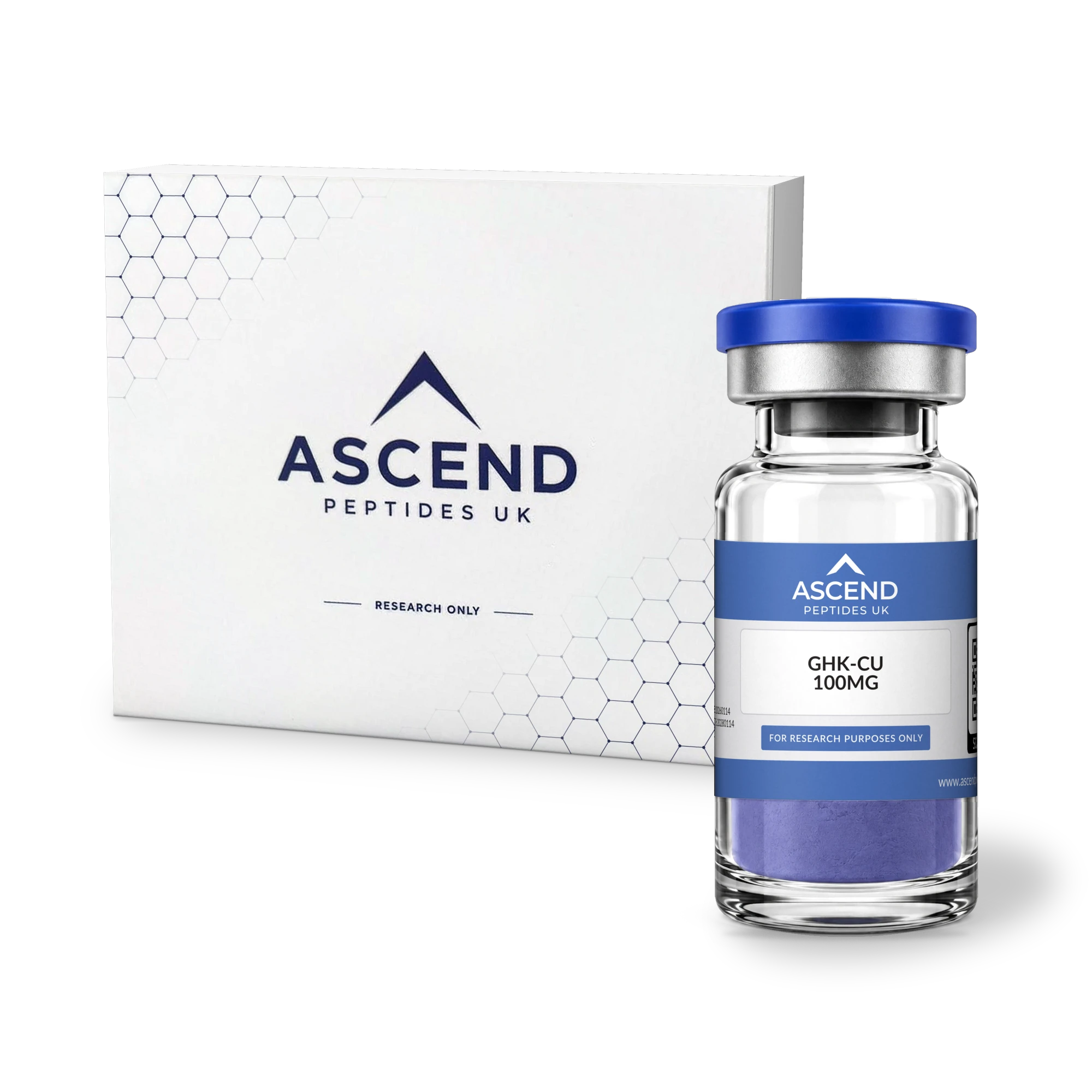
GHK-Cu 100mg (copper tripeptide-1, also written GHKCu, CAS 89030-95-5) supplied as a lyophilised powder in a single sealed vial for laboratory research. The larger format, for extended studies and multi-arm in-vitro designs run from one batch. For in-vitro research use only.
Research guides: What Is GHK-Cu? · GHK-Cu laboratory guide · Smaller format: GHK-Cu 50mg
Safety information: Not intended for human or veterinary use. Use appropriate laboratory safety procedures when handling.
GHK-Cu 100mg should only be used in laboratory settings by qualified personnel.
Ensure all experimental procedures comply with local and institutional regulations.
This peptide is supplied for research and scientific study purposes only.
Janoshik test #125387 was run on one vial labelled GHK-Cu 100mg (nominal strength) from batch 20260114, analysis dated 7 April 2026. It reported a purity of 99.195% and a measured GHK-Cu content of 88.40 mg for that vial. View the report on janoshik.com (verification key I59ZPJ185DNJ).
Purity and measured content are different results: purity is an HPLC measure of the share of detected material that is GHK-Cu, and does not by itself establish quantity. The report does not show that every 100mg vial contains 100mg. Its measurement basis, and whether batch 20260114 matches current stock, are still being confirmed. It applies to the 100mg format only and does not verify 50mg vials.
GHK-Cu 100mg
GHK-Cu 100mg is the copper(II) complex of the tripeptide glycyl-L-histidyl-L-lysine, also known as copper tripeptide-1 or prezatide copper. It is supplied by Ascend Peptides UK as a lyophilised powder in a single sealed vial from UK stock, for laboratory research purposes only, and is the larger of the two GHK-Cu formats.
The chemical identifiers on this page (names, formula, molecular weight, CAS, UNII and PubChem numbers) are reference values for GHK-Cu from the NCATS GSRS record. They describe the compound, not test results for a particular vial.
A published Janoshik report covers one tested vial labelled GHK-Cu 100mg (the nominal strength). It reports HPLC purity and measured GHK-Cu content for that vial only. The batch reference, analysis date and results are listed with the report on the CoA page and in the Certificate of Analysis section above, from where the report can be verified on Janoshik’s website.
Purity and content measure different things. Purity is a chromatographic (HPLC) result: the share of detected material that is the main compound. It does not by itself establish how much material is in the vial or the complete chemical identity of the complex, and the report does not include mass-spectrometry (LC-MS) identity confirmation. The measured content in the report is below the 100mg nominal strength on the label, so the report does not show that every 100mg vial contains 100mg. The basis of that figure (for example, whether it is expressed as the free peptide or the copper complex) has not yet been confirmed. It has also not yet been confirmed whether the tested batch corresponds to current stock, so the report should not be read as describing the vials currently supplied. This section will be updated when both points are confirmed.
All published certificates are listed on the CoA page, and the batch verification page explains how to check one. This report applies to the 100mg format only; it does not verify GHK-Cu 50mg vials.
Working from a single 100mg vial keeps material for an extended series of experiments on one batch, which removes batch-to-batch variation as a variable. The larger quantity also allows more single-use aliquots for concentration-response work across several experimental arms. For pilot work and method development, the 50mg vial is usually sufficient.
GHK is the free tripeptide (C14H24N6O4, CAS 49557-75-7). GHK-Cu is GHK bound to one copper(II) ion through the glycine N-terminal amine, the adjacent amide nitrogen and the histidine imidazole nitrogen (Hureau et al., 2011). This vial contains the copper complex. Structure and mechanism are explained in What Is GHK-Cu?
In cultured fibroblasts, the copper complex was reported to stimulate collagen synthesis from picomolar concentrations, with a maximum near 1 nM (Maquart et al., 1988). A review by Pickart and colleagues reports that GHK can up- or down-regulate at least 4,000 human genes; this is a gene-expression result, not an outcome study (Pickart et al., 2015). These are in-vitro findings from the literature, not properties tested on this product, and do not describe any outcome in humans. Research applications are covered in the GHK-Cu laboratory guide.
Storage requirements are currently being verified with the manufacturer. Please contact ASCEND before purchasing for information about the current product batch.
For in-vitro laboratory research only. Not for human consumption. Not an MHRA-licensed medicine.
GHK-Cu 100mg is supplied strictly for in-vitro laboratory research and not for human use. It is not a medicine, is not an MHRA-licensed product, and is not supplied or marketed for cosmetic, diagnostic, therapeutic or clinical use in humans or animals. Medicinal products supplied for human use in the UK are regulated under the Human Medicines Regulations 2012, with the MHRA responsible for medicines regulation.
Other laboratory research materials supplied by Ascend Peptides UK.
UK same working-day dispatch – Secure payment options –
Laboratory research only
© 2026 by Ascend Peptides Uk.
All products sold by Ascend Peptides UK are intended strictly for laboratory research purposes only. Not intended for human consumption or therapeutic use of any kind.
Per product, applied automatically in your bagAuto-applied in your bag
Ordering more? Contact us for larger-volume pricing →