
PRODUCTS SOLD BY ASCEND PEPTIDES ARE INTENDED FOR RESEARCH USE ONLY.
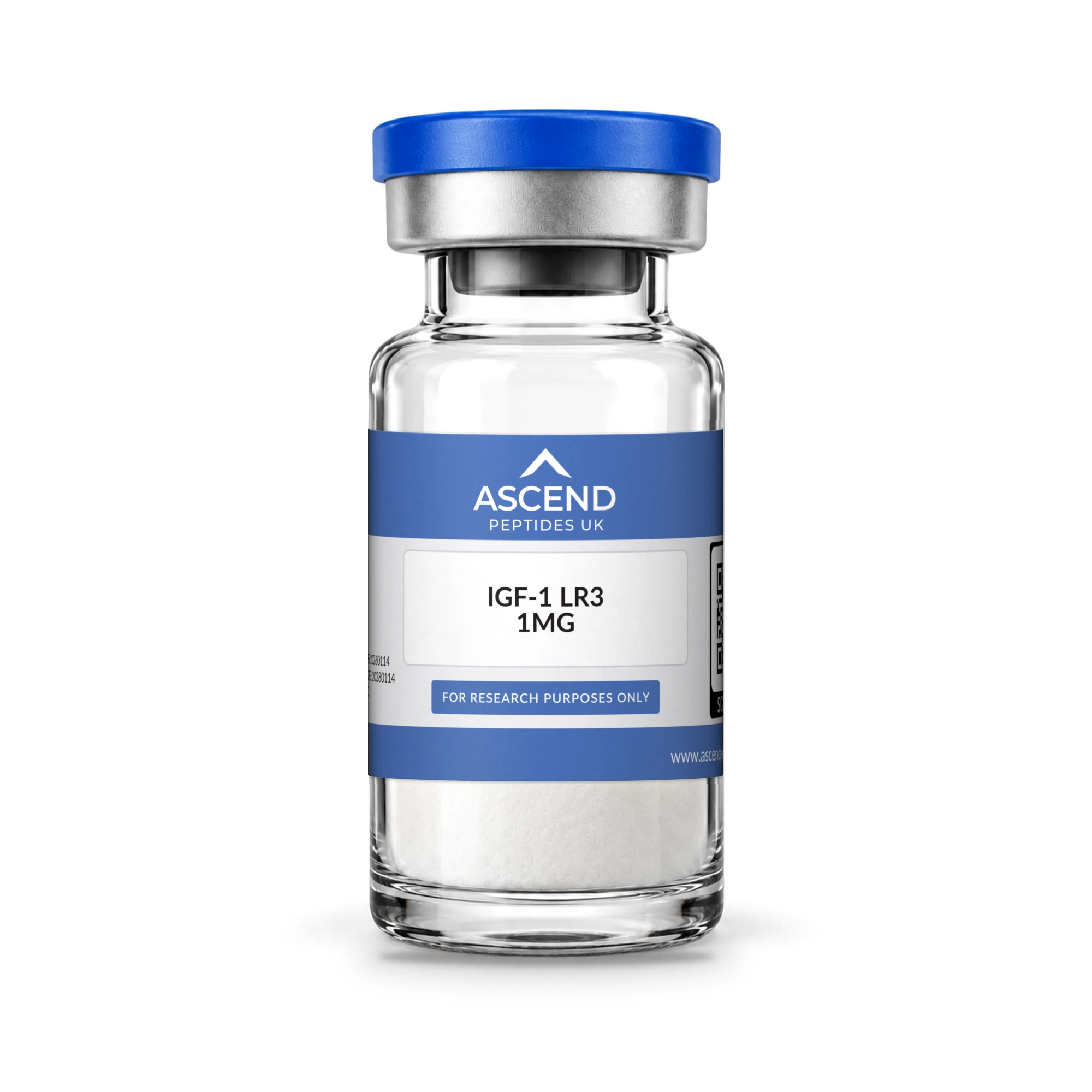
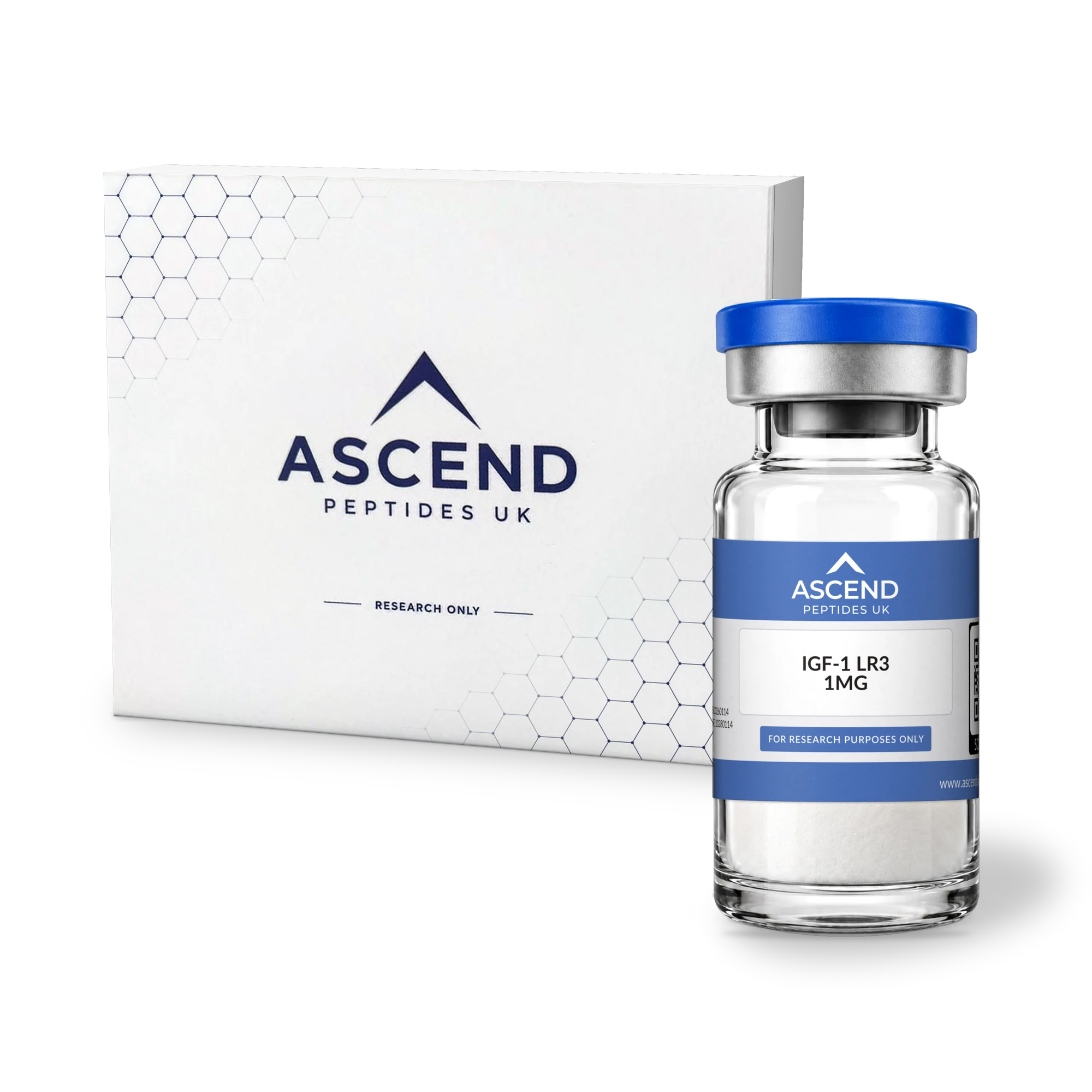
Laboratory research material
IGF-1 LR3 1mg (Long R3 IGF-1, also written IGF1 LR3) research peptide: an 83-amino-acid analogue of human IGF-1 with an arginine substitution at position 3 and a 13-amino-acid N-terminal extension, which reduce its binding to IGF-binding proteins. Supplied lyophilised for in-vitro laboratory research; a Janoshik report is published for a tested vial. Research use only.
Research guides: What Is IGF-1 LR3? · IGF-1 LR3 1mg research guide
Safety Information: Not intended for human or veterinary use. Use appropriate laboratory safety procedures when handling.
IGF-1 LR3 1 mg should only be used in laboratory settings by qualified personnel.
Ensure all experimental procedures comply with local and institutional regulations.
This peptide is supplied for research and scientific study purposes only.
IGF-1 LR3 1 mg:
View Janoshik report #125388 (tested sample: IGF1 LR3 1mg)
This report covers one tested sample. It does not establish that current stock comes from the same batch.
IGF-1 LR3 1mg Research Peptide UK
IGF-1 LR3 1mg (Insulin-like Growth Factor 1 Long Arg3) is a synthetic 83-amino acid analogue of native IGF-1 (70 amino acids), incorporating an N-terminal 13-amino acid extension and an arginine substitution at position 3. These changes greatly reduce its binding to IGF-binding proteins compared with native IGF-1. Molecular mass approximately 9.1 kDa.
Also called Long R3 IGF-I, it has the 83-residue sequence MFPAMPLSSL FVNGPRTLCG AELVDALQFV CGDRGFYFNK PTGYGSSSRR APQTGIVDEC CFRSCDLRRL EMYCAPLKPA KSA (written in blocks of ten): the extension MFPAMPLSSLFVN followed by the 70-residue IGF-I sequence with arginine (R) in place of glutamic acid at position 3. The folded molecule carries three disulfide bonds. These are reference properties of the compound, not analytical results for the supplied vial.
IGF-1 LR3 acts as an agonist at the IGF-1 receptor (IGF-1R), a receptor tyrosine kinase. Upon receptor binding, it initiates the downstream PI3K and Akt signalling cascade, governing cell survival and proliferation, alongside the MAPK and ERK cascade governing cell growth and differentiation. Its reduced binding to IGF-binding proteins is the property published work links to its greater potency in some cultured cell lines that secrete IGFBPs (Francis et al., 1992).
Researchers designing protocols with the IGF-1 LR3 research peptide should account for an important pharmacological caveat: IGF-1 LR3 retains residual affinity for the insulin receptor (IR) and hybrid IR/IGF-1R receptors. Study designs investigating metabolic pathways must account for this variable and should not treat IGF-1 LR3 as a pure IGF-1R probe.
IGF-1 LR3 is used in IGF-1 signalling research, which sits downstream of the GH-axis pathways studied in the experimental literature. Upstream GHRH and GHRP compounds — such as Ipamorelin 5mg targeting GHS-R1a and CJC-1295 Without DAC 10mg targeting GHRHR — stimulate GH secretion, which drives downstream IGF-1 production. IGF-1 LR3 acts directly at IGF-1R rather than through GH release, which makes it a different research tool from upstream GH-axis compounds; in whole-animal work, endogenous IGF-1 is still present, so it is not studied in complete isolation. For metabolic pathway research alongside IGF-1 axis work, AOD-9604 5mg is a separate metabolic research peptide; published work concluded that its lipolytic actions are not mediated directly through the beta-3 adrenergic receptor, and its mechanism has not been established.
For structure, receptor mechanism and how IGF-1 LR3 differs from native IGF-1, see What Is IGF-1 LR3?; for laboratory research context, see the IGF-1 LR3 1mg research guide.
Independent testing by Janoshik: one published report covers a tested sample of IGF-1 LR3 1mg and states its measured content and HPLC purity (the figures and batch reference are on the CoA page). The report does not separately include LC-MS identity, endotoxin (LAL) or sterility results; HPLC purity alone does not establish identity; and the report does not show that every vial in current stock matches the tested sample.
Evidence status: published work on IGF-1 LR3 is cell-culture and animal research, such as the original characterisation in cultured cells (Francis et al., 1992) and infusion and injection studies in rats (Tomas et al., 1996). It is not an approved medicine, and these findings do not establish safety or benefit in humans.
Listed as a prohibited substance under anti-doping regulations at all times.
For in-vitro research only. Not an MHRA-licensed medicine.
Other laboratory research materials supplied by Ascend Peptides UK.
UK same working-day dispatch – Secure payment options –
Laboratory research only
© 2026 by Ascend Peptides Uk.
All products sold by Ascend Peptides UK are intended strictly for laboratory research purposes only. Not intended for human consumption or therapeutic use of any kind.
Per product, applied automatically in your bagAuto-applied in your bag
Ordering more? Contact us for larger-volume pricing →