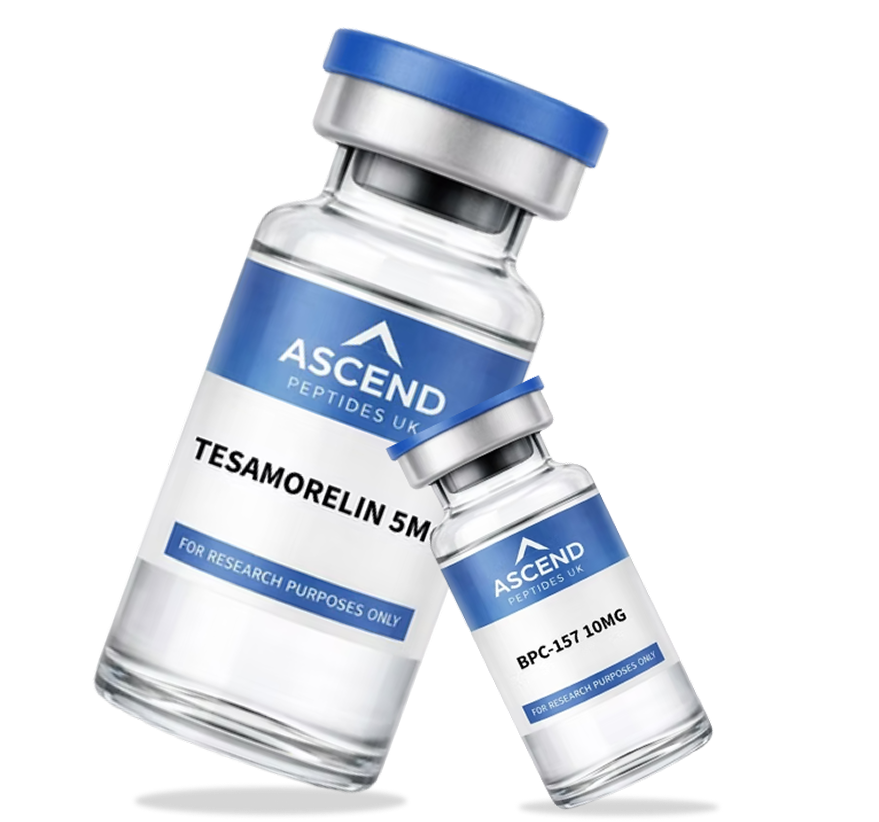


How to verify peptide quality begins with checking whether the supplier provides clear, batch-specific evidence for both purity and identity. This checklist is a quick-reference companion to our complete guide to choosing a UK peptide supplier, which covers the full 8-criteria evaluation framework. Researchers should review the certificate of analysis, confirm the testing laboratory, compare batch numbers and assess the supplier’s storage, packaging and research-use documentation. This six-step checklist explains the key checks to complete before sourcing peptides for laboratory research, and pairs well with that complete guide.
Step 1: Demand a Certificate of Analysis (CoA)
A genuine Certificate of Analysis is the single most important document a supplier can provide. A proper CoA should include:
- HPLC (High-Performance Liquid Chromatography) results, confirming purity percentage
- Mass spectrometry data, confirming the molecular identity of the peptide matches what’s on the label
- Batch or lot number, which should match the specific vial or product you receive
- Date of testing and the testing laboratory’s details
Be cautious of suppliers who provide a single generic CoA for an entire product line rather than batch-specific documentation; this is a common shortcut among lower-quality vendors.
Step 2: Check Purity Percentage and Understand What It Means
Reputable suppliers typically report purity in the range of 98%+ as measured by HPLC. However, purity alone doesn’t tell the whole story:
- Purity tells you how much of the sample is the intended peptide versus impurities or degradation products.
- Identity confirmation (via mass spec) tells you whether that peptide is actually the compound it claims to be.
A product can technically show high “purity” while still being the wrong peptide entirely if identity testing wasn’t performed. Always look for both data points together.
Step 3: Verify Third-Party (Independent) Testing
In-house testing is a good sign, but independent, third-party laboratory verification is the gold standard. When evaluating a supplier, ask:
- Is testing conducted by an accredited, independent laboratory not owned by the manufacturer?
- Can the supplier provide contact details or accreditation information for the testing lab?
- Are test results available on request for specific batch numbers, not just generic marketing claims?
Suppliers confident in their product quality are typically happy to share this information transparently.
Step 4: Examine Packaging, Storage, and Cold-Chain Handling
Peptides are sensitive compounds that can degrade quickly when exposed to heat, light, or moisture. Quality indicators here include:
- Lyophilised (freeze-dried) form for storage and shipping stability
- Vacuum-sealed or properly sealed vials to prevent moisture ingress
- Cold-chain shipping (insulated packaging, ice packs where appropriate) for temperature-sensitive products
- Clear labelling including peptide name, quantity, batch number, and storage instructions
Poor packaging is often a leading indicator of poor manufacturing practices further upstream.
Step 5: Research the Supplier’s Manufacturing Standards
Look beyond the product page and investigate how the peptide is actually made:
- Does the supplier disclose their manufacturing process or facility standards (e.g., GMP-aligned practices)?
- How long has the supplier been operating, and what is their reputation within the research community?
- Are reviews, testimonials, or community feedback available from other researchers?
- Does the company have transparent contact information, a registered business address, and responsive customer service?
A supplier with nothing to hide will generally be forthcoming about these details when asked directly.
Step 6: Confirm Compliance and Appropriate Labelling
Finally, check that the supplier operates within UK regulatory expectations:
- Products should be clearly labelled “for research use only“ or equivalent, not marketed for human consumption, treatment, or diagnostic use.
- The supplier should not make medical claims about treating, curing, or preventing any condition.
- Terms of sale should reflect genuine research-use intent, including any required researcher acknowledgements.
This isn’t just a legal checkbox; suppliers who are careful about compliance also tend to be more rigorous about quality control overall. The two often go hand in hand.
Putting the Checklist Into Practice
| Step | What to Check | Red Flag |
| 1 | Batch-specific CoA | Generic, undated, or missing CoA |
| 2 | Purity + identity data | Purity claimed without mass spec confirmation |
| 3 | Independent lab testing | Only in-house, unverifiable claims |
| 4 | Packaging & cold-chain | Flimsy packaging, no temperature control |
| 5 | Manufacturing transparency | Vague sourcing, no facility information |
| 6 | Compliance & labelling | Medical claims, no research-use disclaimer |
Final Thoughts
Verifying peptide quality takes a little extra diligence, but it’s essential for anyone relying on consistent, reproducible research material. A trustworthy supplier should welcome these questions, not deflect them transparency is one of the clearest signs of a quality-focused operation.
At Ascend Peptides UK, research peptides covered by our batch-verification programme are supplied with batch-specific third-party testing, supporting documentation, and clear research-use labelling, so researchers can focus on their work with confidence in what they’re working with.