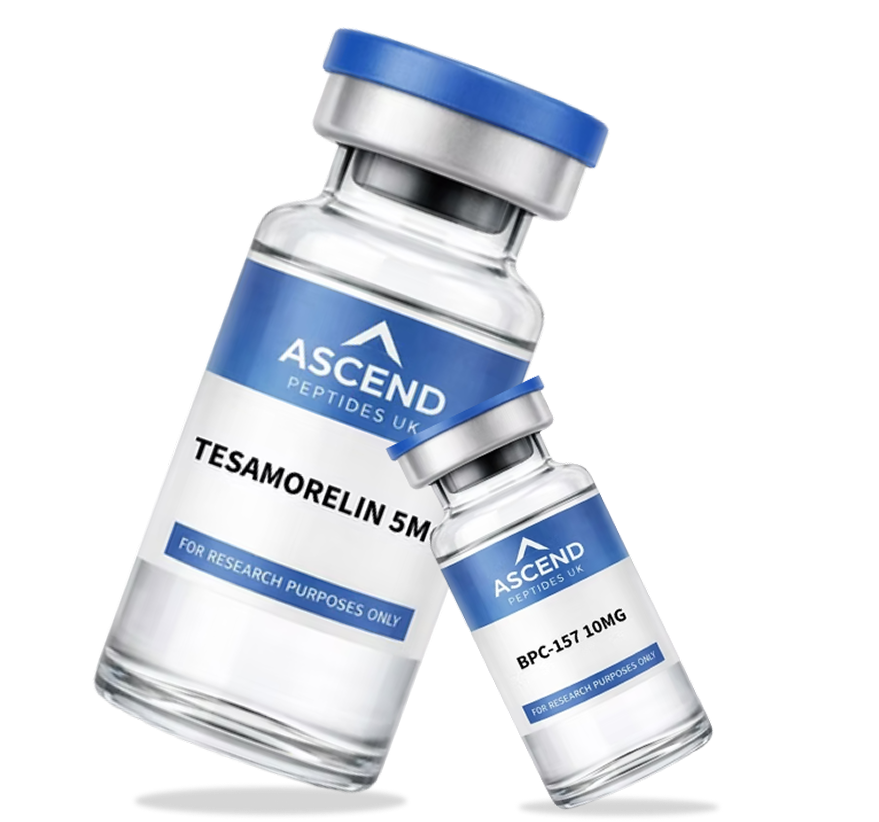


Research peptides UK refers to laboratory-grade peptide compounds supplied for controlled in-vitro research within the United Kingdom. If you are new to the field, the term can seem deceptively simple. Peptides are short chains of amino acids that occur throughout biology, but research peptides are more specific: they are synthetic compounds manufactured under controlled conditions to defined purity standards and supplied as molecular tools for laboratory investigation. Understanding what they are, how they differ from medicines, who uses them, and what to look for when sourcing them in the UK is essential for any researcher beginning work in this area.
If you are new to the field of research peptides in the UK, the term itself can seem deceptively simple. Peptides are everywhere in biology they are short chains of amino acids that the body produces and uses constantly. But research peptides are something more specific: they are synthetic compounds, manufactured under controlled conditions to a defined purity standard, supplied for use as molecular tools in controlled laboratory investigation. Understanding what they are, how they differ from medicines, who uses them and why, and what to look for when sourcing them in the UK is foundational knowledge for any researcher beginning to work in this area.
This guide covers exactly that. It is written specifically for UK-based researchers, laboratory professionals, academic institutions, and scientifically curious individuals who want a clear, accurate, non-promotional explanation of what research peptides are and what they are used for. All content on this page relates strictly to laboratory research. All research peptides discussed are for in-vitro laboratory investigation only and are not intended for human consumption of any kind.
What Is a Research Peptide? The Scientific Definition
A peptide is a molecule formed by two or more amino acids joined by peptide bonds. When the chain contains fewer than approximately 50 amino acids, it is typically classified as a peptide. Longer chains are generally referred to as proteins. The human body produces thousands of naturally occurring peptides insulin, glucagon, endorphins, oxytocin, and growth hormone are all peptides and they serve as signalling molecules, hormones, neurotransmitters, and structural components throughout biological systems.
A research peptide is a synthetically manufactured version of a naturally occurring peptide, or a synthetic analogue designed to mimic, enhance, or specifically investigate the properties of a natural peptide in a laboratory setting. The term “research” in research peptide carries a specific meaning in the UK regulatory context: these are compounds supplied for in-vitro scientific investigation, not for clinical use, therapeutic application, or human consumption.
The most important distinction to understand from the outset is this: a research peptide and a medicine are fundamentally different things, even if they are structurally similar or derived from the same biological molecule. A research peptide has not been approved for clinical use by the MHRA. It is not packaged, dosed, labelled, or intended for human therapeutic application. It is a laboratory tool as precise and specific a tool as a restriction enzyme, a cell culture reagent, or a microscopy stain used to investigate biological mechanisms in controlled scientific conditions.
How Are Research Peptides Made? Synthesis Explained
The vast majority of research peptides available for UK laboratory use are manufactured through a process called Solid Phase Peptide Synthesis (SPPS). In SPPS, amino acids are added one at a time to a growing chain that is anchored to a solid resin support. Each addition cycle involves deprotection of the chain, coupling of the next amino acid, and washing steps to remove unreacted reagents. Once the complete sequence has been assembled, the peptide is cleaved from the resin and the protecting groups are removed.
After synthesis, the crude peptide undergoes purification most commonly by High-Performance Liquid Chromatography (HPLC), which separates the target compound from synthesis by-products, incomplete sequences, and other impurities. The purity of the final product is then measured and expressed as a percentage. For a compound to qualify as research-grade, the target peptide should constitute at least 98% of the material confirmed by batch-specific HPLC analysis from an independent analytical laboratory.
Molecular identity must also be confirmed separately. HPLC tells you how pure the material is, but it cannot tell you that the pure material is actually the compound you ordered. That confirmation requires mass spectrometry specifically LC-MS (Liquid Chromatography-Mass Spectrometry), which measures the molecular weight of the compound and compares it against the theoretical mass of the target sequence. Both HPLC purity and LC-MS identity confirmation are non-negotiable requirements for research-grade peptide supply.
What Do Research Peptides Do in Laboratory Models?
Research peptides are used in laboratory settings as molecular probes compounds that bind to specific receptors, enzymes, or signalling proteins and produce measurable effects in cell-based or biochemical assay systems. Because peptides are highly specific in their receptor interactions, they allow researchers to investigate the contribution of individual molecular pathways to complex biological outcomes with a precision that non-selective chemical tools cannot match.
The practical applications of research peptides in UK laboratory settings are broad. Some examples illustrate the range:
- TB-500 10mg binds to globular actin (G-actin) in laboratory cell models, modulating the equilibrium between monomeric G-actin and filamentous F-actin. This allows researchers to study the role of cytoskeletal dynamics in cell migration, wound closure assays, and related cellular behaviour without the confounding effects of compounds that affect multiple biological targets simultaneously.
- BPC-157 10mg modulates nitric oxide synthase (NOS) activity in vascular and tissue cell models, providing a molecular tool for investigating the nitric oxide signalling pathway and its downstream effects on cell behaviour, vascular biology, and inflammatory marker expression.
- IGF-1 LR3 1mg activates the IGF-1 receptor (IGF-1R) in cell culture systems, initiating the PI3K/Akt and MAPK/ERK signalling cascades. Its extended in vitro half-life of approximately 20 to 30 hours, compared to approximately 12 minutes for native IGF-1, makes it the preferred growth factor compound for UK cell culture research requiring sustained receptor stimulation across multi-day experimental protocols.
- GHK-CU 50mg and 100mg provide a copper-binding tripeptide for studying collagen synthesis, extracellular matrix modulation, antioxidant signalling pathways, and gene expression regulation in fibroblast cell models. Genome-wide studies have documented GHK-CU interactions affecting the expression of over 4,000 human genes.
- CJC-1295 Without DAC 10mg acts as a selective GHRH receptor (GHRHR) agonist in pituitary cell models, producing pulsatile GH secretion through the cAMP and PKA signalling cascade. Its DPP-IV resistant amino acid substitutions extend its activity window to approximately 30 minutes in vitro, making it the most widely studied GHRH analogue in combined growth hormone pathway research protocols.
Research Peptides vs Medicines — The UK Regulatory Distinction
One of the most important things for any UK researcher to understand before purchasing or working with research peptides is the precise regulatory distinction between a research chemical and a licensed medicine. This distinction is not merely administrative it has significant implications for how these compounds may be legally purchased, used, documented, and referenced in research outputs.
| Criterion | Research Peptide | Licensed Medicine |
|---|---|---|
| Primary purpose | Scientific investigation in controlled laboratory conditions | Diagnosis, treatment, or prevention of disease in patients |
| Regulatory status | Research chemical — not classified as medicine by MHRA | Licensed by MHRA under Human Medicines Regulations 2012 |
| Who uses it | Researchers, laboratory professionals, academic institutions | Patients under clinical supervision |
| Use setting | In vitro laboratory or controlled in vivo research (ASPA 1986) | Clinical settings — hospitals, clinics, pharmacies |
| Purity standard | Research-grade: HPLC verified purity, LC-MS identity confirmation | Pharmaceutical-grade: GMP manufacturing with clinical trial data |
| Dosing claims | No dosing guidance — research use only, no protocol claims | Licensed dose regimens based on clinical trial evidence |
| Human use | Not for human consumption under any circumstances | Approved for human use under medical supervision |
| UK purchase | Legal to purchase as research chemical for legitimate scientific use | Prescription required; supplied through licensed pharmacies |
In the United Kingdom, research peptides are not classified as medicines under the Human Medicines Regulations 2012. They are not approved for human therapeutic use by the MHRA and must not be marketed, presented, or used as medicinal products. They are classified as research chemicals a category of substances that are legal to purchase and possess in the UK for legitimate scientific research purposes, without being controlled substances under current UK law.
Researchers should also be aware that several research peptides are listed on the WADA (World Anti-Doping Agency) Prohibited List and are prohibited for use by athletes subject to anti-doping regulations under UKAD (UK Anti-Doping). This applies to compounds including TB-500, BPC-157, IGF-1 LR3, the CJC-1295 family, ipamorelin, tesamorelin, sermorelin, MT-1, MT-2, and AOD-9604, among others. Researchers working in sports science or applied physiology must account for this classification when designing protocols involving human subjects.
Who Uses Research Peptides in the UK?
Research peptides in the UK are used across a range of scientific disciplines and institutional settings. The common thread is legitimate scientific investigation conducted under appropriate professional and institutional frameworks. Primary user groups include:
- Independent research scientists conducting peptide pharmacology, receptor biology, or cell signalling research outside of university settings.
- Academic researchers at UK universities and research institutes studying the molecular mechanisms of growth factor signalling, wound biology, tissue remodelling, metabolic regulation, and related fields.
- Private research laboratories and contract research organisations (CROs) conducting preclinical studies, compound screening, and target validation for pharmaceutical, cosmetic, or agricultural research clients.
- Biotechnology companies in the early stages of compound development, using research peptides as reference compounds, positive controls, or molecular tools for mechanism-of-action studies.
- Sports science researchers studying the molecular pharmacology of performance-related signalling pathways with full awareness of WADA compliance requirements for any protocols involving human participants.
What unites all legitimate users of research peptides in the UK is the purpose of purchase: in-vitro laboratory investigation conducted by qualified researchers under appropriate institutional oversight. Research peptides are not purchased for personal use, self-experimentation, or any application outside of a controlled scientific environment.
How Are Research Peptides Categorised?
Research peptides are grouped into categories based on their primary receptor targets and the biological systems they are most commonly used to investigate. Understanding these categories helps researchers navigate the available compounds and identify the most appropriate molecular tool for their specific research question.
The table below summarises the main research peptide categories available from Ascend Peptides UK, along with their primary research focus and examples from the current range:
| Research Peptide Category | Primary Research Focus | Examples in This Range |
|---|---|---|
| Recovery Research Peptides | Actin-binding dynamics, nitric oxide pathway, cellular migration assays | TB-500 10mg, BPC-157 10mg |
| Growth Hormone Research Peptides | GHRH and GHRP receptor pharmacology, pituitary GH pathway studies | CJC-1295 Without DAC 10mg, Ipamorelin 5mg, Sermorelin 2mg, Tesamorelin 5mg |
| Growth Factor Research Peptides | IGF-1 receptor signalling, PI3K/Akt and MAPK/ERK pathway research | IGF-1 LR3 1mg |
| Metabolic Research Peptides | Beta-3 adrenergic receptor, lipolysis pathway, adipocyte cell models | AOD-9604 5mg and 10mg |
| Skin Research Peptides | Collagen synthesis, extracellular matrix biology, copper chaperone pathways | GHK-CU 50mg and 100mg |
| Melanotan Research Peptides | Melanocortin receptor pharmacology, melanogenesis biology, MC1R and MC4R | MT-1 10mg, MT-2 10mg |
| Mitochondrial Research Peptides | AMPK pathway activation, mitochondria-to-nucleus signalling | MOTS-C 10mg and 40mg |
| Research Supplies | Peptide reconstitution, storage, laboratory preparation | Bacteriostatic Water 10ml |
Each category encompasses compounds with distinct mechanisms that make them non-interchangeable molecular tools. For example, TB-500 10mg and BPC-157 10mg are both classified as Recovery Research Peptides, but they operate through entirely different pathways TB-500 via actin-binding dynamics and BPC-157 via nitric oxide signalling — and are mechanistically complementary rather than equivalent. Full mechanism guides for both compounds are available in the TB-500 10mg research guide and the BPC-157 10mg research guide.
What Is Research-Grade Purity and Why Does It Matter?
The purity of a research peptide directly affects the validity of research data generated using it. If the compound supplied to a laboratory contains significant impurities incomplete synthesis sequences, degradation products, residual reagents, or incorrectly synthesised analogues — the biological effects observed in an experiment may not be attributable solely to the target compound. This undermines experimental reproducibility, introduces confounding variables, and can produce misleading results that are difficult to detect without independent compound verification.
Research-grade purity has a specific meaning: it requires documented, independent, batch-specific analytical verification of both purity and molecular identity. The minimum acceptable HPLC purity for research-grade peptides is generally considered to be 98%, confirmed by analysis at an independent analytical laboratory on a batch-specific basis. Generic or non-batch-specific certificates of analysis are not adequate for research purposes.
| Quality Marker | What It Confirms | Ascend Peptides UK Standard |
|---|---|---|
| HPLC Purity | Percentage of the sample that is the target compound | Greater than or equal to 98% on every batch |
| LC-MS Identity | Molecular mass matches expected structure — confirms correct compound | Confirmed on every batch before dispatch |
| Independent testing | Analysis performed by external specialist laboratory, not supplier | All testing by Janoshik — publicly verifiable at janoshik.com |
| Batch-specific CoA | Separate documentation for each production lot | Every vial has its own Certificate of Analysis |
| Lyophilised format | Freeze-dried powder — maximises stability during storage and transit | All compounds supplied in lyophilised format only |
At Ascend Peptides UK, every batch of every research peptide is independently tested by Janoshik before dispatch. The full Certificate of Analysis — showing the batch-specific HPLC purity percentage and LC-MS molecular identity confirmation is publicly verifiable at janoshik.com using the batch number supplied with every order. This independent verifiability is what distinguishes a properly documented research-grade compound from an unverified supplier claim.
How to Source Research Peptides in the UK Safely
UK researchers sourcing research peptides for laboratory use should evaluate potential suppliers against a clear set of quality, regulatory, and documentation criteria before placing an order. The following checklist summarises the key considerations, and maps directly onto our complete guide to choosing a UK peptide supplier:
- Independent third-party testing: Ensure every batch has been tested by an external specialist laboratory not by the supplier in-house. In-house testing is unverifiable and represents a conflict of interest.
- HPLC purity above 98%: The purity figure should be from the batch you are purchasing, not a generic certificate applied to all production.
- LC-MS identity confirmation: Purity without identity confirmation is insufficient. The supplied compound must be structurally verified to be what it is claimed to be.
- Publicly verifiable CoA: The certificate should be checkable independently. Janoshik batch numbers allow any researcher to confirm results directly at janoshik.com.
- Lyophilised powder format: Liquid peptide solutions are unstable during shipping and degrade faster. Research-grade compounds should be supplied in lyophilised format only.
- UK-based dispatch: UK-sourced supply eliminates international transit risks, customs delays, and additional temperature exposure.
- Research-only labelling: The supplier should make absolutely clear that products are for laboratory research use only, with no therapeutic or dosing claims anywhere on the product or website.
- Compliance with UK regulations: The supplier should operate in compliance with applicable UK research chemical regulations, MHRA guidelines, and UK GDPR requirements.
Researchers can browse our UK research peptide catalogue to review available compounds, batch documentation and product specifications.
Ascend Peptides UK meets all of these criteria. Our complete range of research-grade compounds including recovery research peptides such as TB-500 10mg and BPC-157 10mg, growth hormone research peptides, skin research peptides including GHK-CU, and laboratory supplies including bacteriostatic water for research — is available for same-day UK dispatch on orders placed before 4pm, with free shipping on orders over £50.
Which Research Peptide Is Right for Your UK Laboratory Programme?
Selecting the correct research peptide depends entirely on the specific biological pathway or molecular mechanism your research programme is designed to investigate. The following overview links each primary research category to the relevant compound guides published by Ascend Peptides UK, where full mechanism detail, experimental design considerations, and protocol guidance are available.
For cytoskeletal dynamics, actin-binding research, and cell migration studies: TB-500 10mg research guide.
For nitric oxide pathway research, VEGF signalling, and gut biology assays: BPC-157 10mg research guide.
For GHRH receptor pharmacology and pulsatile GH pathway studies: CJC-1295 Without DAC 10mg research guide.
For IGF-1 receptor signalling, PI3K/Akt pathway research, and cell culture growth factor studies: IGF-1 LR3 1mg research guide.
For copper peptide research, collagen synthesis, and ECM biology: GHK-CU 50mg research guide.
For melanocortin receptor pharmacology and melanogenesis biology: MT-1 10mg melanocortin research guide.
For beta-3 adrenergic receptor and lipolysis pathway research: AOD-9604 10mg research guide.
For peptide reconstitution guidance and storage protocols: Bacteriostatic water for research guide.
Frequently Asked Questions — What Are Research Peptides UK
Q: What are research peptides and what are they used for in UK laboratories?
A: Research peptides are synthetic amino acid chains manufactured to defined purity standards and supplied for use as molecular probes in controlled laboratory investigation. In UK laboratories, they are used to study specific biological pathways — receptor pharmacology, cell signalling cascades, cytoskeletal dynamics, gene expression — in in vitro cell-based or biochemical assay systems. They are not medicines and are not for human consumption under any circumstances.
Q: Are research peptides the same as medicines or pharmaceutical drugs?
A: No. Research peptides are classified as research chemicals in the UK, not as medicines. They are not approved for human therapeutic use by the MHRA under the Human Medicines Regulations 2012. While some research peptides share structural similarities with pharmaceutical compounds, they are not manufactured under pharmaceutical GMP conditions, do not carry clinical dosing approval, and must not be used therapeutically. They are laboratory tools.
Q: Is it legal to buy research peptides in the UK?
A: Yes. Research peptides are legal to purchase in the United Kingdom as research chemicals for legitimate scientific and laboratory use. They are not classified as controlled substances under UK law. However, purchasers must confirm they are 18 years of age or older and are purchasing solely for lawful laboratory research purposes. Several research peptides are also listed on the WADA Prohibited List — athletes subject to anti-doping regulations must not use these compounds.
Q: What purity standard should a research peptide meet?
A: Research-grade peptides should meet a minimum of 98% purity confirmed by HPLC analysis on a batch-specific basis, with LC-MS molecular identity confirmation from an independent third-party laboratory. Generic purity certificates not specific to the batch you are purchasing are not acceptable for research purposes. Ascend Peptides UK tests every batch through Janoshik, with results publicly verifiable at janoshik.com.
Q: What is the difference between HPLC and LC-MS testing for peptides?
A: HPLC (High-Performance Liquid Chromatography) confirms purity — it measures what proportion of the sample is the target compound versus impurities. LC-MS (Liquid Chromatography-Mass Spectrometry) confirms molecular identity — it measures the mass of the compound and verifies it matches the expected molecular weight of the target peptide. Both tests are required. HPLC alone cannot confirm you have the correct compound.
Q: Who can buy research peptides in the UK?
A: Research peptides in the UK are available to qualified research scientists, academic researchers, private laboratory professionals, contract research organisations, and biotechnology companies purchasing for legitimate in-vitro scientific investigation. Purchasers must confirm research-only intent. Ascend Peptides UK requires all buyers to confirm they are purchasing for laboratory research purposes only.
Q: What is a lyophilised peptide and why is it the correct format for research?
A: Lyophilisation is a freeze-drying process that removes water from the peptide solution under vacuum, producing a stable powder that maintains molecular integrity during storage and transit at ambient temperatures. Lyophilised peptides are more stable than liquid formulations, resist degradation over longer storage periods, and are the accepted standard format for research-grade compounds. All Ascend Peptides UK research peptides are supplied in lyophilised format only.
Q: What is bacteriostatic water and why do I need it for research peptides?
A: Bacteriostatic water is sterile water containing 0.9% benzyl alcohol, which prevents bacterial growth across repeated vial accesses. It is the most widely referenced reconstitution solvent for research peptides in published laboratory protocols, providing extended stability in the reconstituted solution and allowing multi-use access without contamination risk. Ascend Peptides UK supplies BP-grade bacteriostatic water for research alongside all compound orders, with free inclusion on orders over £75.
Q: How do I choose the right research peptide for my laboratory protocol?
A: The correct research peptide for your protocol depends entirely on which biological pathway or receptor you are investigating. Each research peptide category targets different molecular mechanisms: recovery research peptides (TB-500, BPC-157) for cytoskeletal and nitric oxide pathway research; growth hormone peptides (CJC-1295, Ipamorelin, Sermorelin, Tesamorelin) for GHRH and GHRP receptor studies; skin peptides (GHK-CU) for collagen and ECM biology; metabolic peptides (AOD-9604) for lipolysis pathway research. The research guides linked throughout this page cover the specific mechanism of each compound.
Q: Does Ascend Peptides UK ship research peptides same day in the UK?
A: Yes. All Ascend Peptides UK orders placed before 4pm Monday to Friday are dispatched same day from our UK facility. Lyophilised powder format ensures compound integrity during transit without cold chain requirements. Free standard UK shipping is available on all orders over £50, and a free 10ml vial of bacteriostatic water is included with orders over £75.
Scientific References
1. Malinda KM, et al. (1999). Thymosin beta4 accelerates wound healing. J Invest Dermatol. PMID: 10469335
2. Pickart L, Margolina A. (2018). Regenerative and protective actions of the GHK-Cu peptide. Int J Mol Sci. PMID: 29986520
3. Raun K, et al. (1998). Ipamorelin, the first selective growth hormone secretagogue. Eur J Endocrinol. PMID: 9849822
External authority links: pubchem.ncbi.nlm.nih.gov (molecular data) | gov.uk/mhra (UK regulatory status) | wada-ama.org (prohibited list)
DISCLAIMER: All products supplied by Ascend Peptides UK are intended strictly for in-vitro laboratory research purposes only. They are not intended for human consumption or for any therapeutic, diagnostic, or clinical use. None of the items offered are classified as medicinal products by the MHRA. It is the buyer’s responsibility to ensure that all purchases and usage comply with applicable laws and regulations. Ascend Peptides UK accepts no liability for misuse.