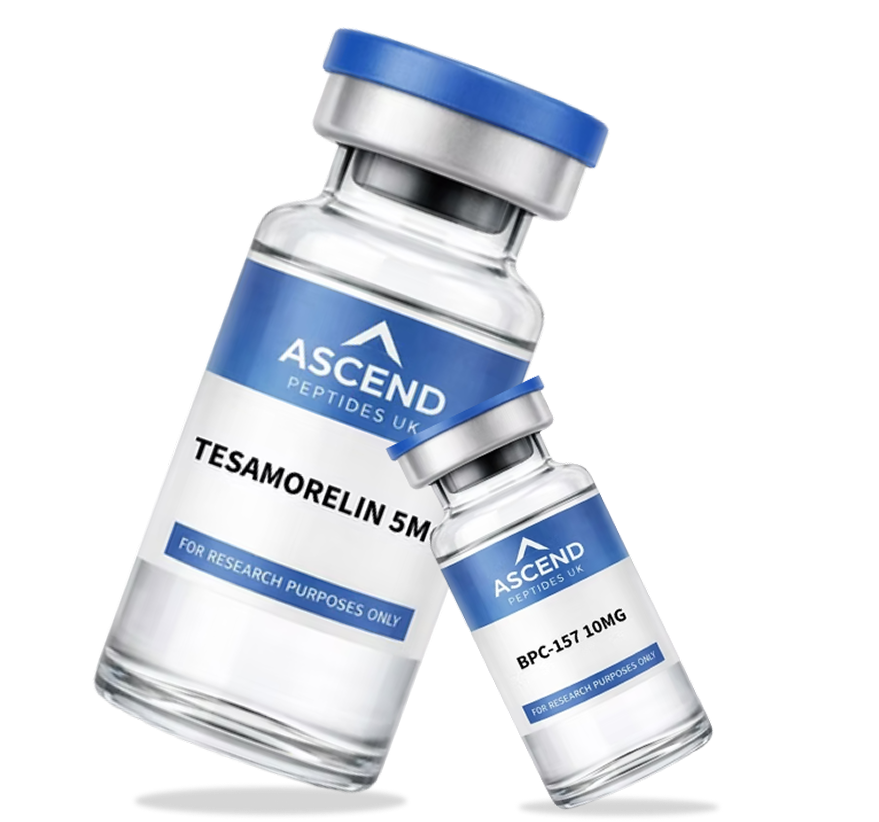

Few research peptides have generated as much consistent scientific attention as BPC-157. Derived from a partial sequence of Body Protection Compound, a protein found naturally in gastric juice, this synthetic pentadecapeptide has been the subject of a substantial body of animal and in vitro laboratory research across a wide range of scientific disciplines.
This guide is written for both laboratory scientists conducting formal research programmes and scientifically legitimate individuals who want to understand what this compound is, how it behaves in laboratory models, and why it has maintained such strong interest within the global peptide research community.
Ascend Peptides UK supplies BPC-157 10mg as a high-purity research peptide for laboratory investigation only. All information in this guide is provided strictly for scientific and educational purposes. This compound is not intended for human consumption, clinical use, or therapeutic application.
What Is BPC-157? Structure and Origin Explained
BPC-157 is a synthetic pentadecapeptide, a chain of exactly 15 amino acids. The name stands for Body Protection Compound 157, referring to a specific experimentally designated sequence derived from the parent protein during research development. The numbering reflects its place in a series of sequences tested from the parent BPC protein, rather than a positional reference within the protein chain itself. That parent protein, Body Protection Compound, is found naturally in human gastric juice, where it plays a reasonably well-established role in gastric cytoprotection.
The 15-amino acid sequence of this compound is: Gly-Glu-Pro-Pro-Pro-Gly-Lys-Pro-Ala-Asp-Asp-Ala-Gly-Leu-Val, with a molecular weight of approximately 1,419 Daltons. This particular arrangement gives the peptide its distinctive biochemical properties and distinguishes it from other synthetic research peptides in terms of its stability profile and interactions in laboratory models.
One of the most scientifically interesting characteristics of this compound is its notable stability in biological environments. Unlike many peptides that degrade rapidly when exposed to gastric acid or enzymatic activity, this sequence demonstrates remarkable resistance to hydrolysis under acidic conditions, a property that has made it an interesting subject for laboratory research and a useful tool for studying peptide stability across a range of experimental conditions.
Mechanism of Action: What Laboratory Research Has Found
The precise mechanism by which BPC-157 exerts its effects in laboratory models is an active area of scientific investigation. It is worth noting upfront that no specific receptor for BPC-157 has been conclusively identified to date; this is an important caveat for researchers designing receptor-binding studies, as it distinguishes this compound from peptides with a well-defined single-receptor mechanism.
Instead, published laboratory research has documented interactions across multiple molecular pathways. These vary in the strength and consistency of supporting evidence, so it is useful to distinguish between the better-established findings and those representing a more preliminary evidence base.
More consistently replicated findings:
Nitric oxide (NO) system modulation: The most robustly documented mechanism across published studies. Multiple independent research groups have identified interactions between this peptide and the nitric oxide pathway, which plays a central role in vascular biology, inflammation signalling, and cellular communication.
Growth factor upregulation (VEGF pathway): Also well-represented in the published literature. Laboratory research has documented interactions with vascular endothelial growth factor (VEGF) and related growth factors involved in angiogenesis, the formation of new blood vessels, making this a significant area of interest in regenerative research.
More preliminary findings, documented but less consistently replicated:
FAK-paxillin pathway: Research has identified activation of the focal adhesion kinase (FAK) and paxillin signalling pathway, involved in cell migration and tissue organisation in laboratory models. The evidence base here is smaller and warrants cautious interpretation.
Neurotransmitter system interactions: Published research has examined interactions with dopaminergic, serotonergic, and GABAergic systems in animal models, contributing to its use in neurobiological research contexts. These findings are documented but derive predominantly from animal studies and should be interpreted accordingly.
Tendon and ligament fibroblast activity: In vitro studies have examined how this compound affects fibroblast behaviour, the cells responsible for producing collagen and extracellular matrix components, making it relevant to connective tissue research. Replication across independent research groups remains more limited in this area.
It is important to note that the majority of this mechanistic research has been conducted in cell culture and animal models, with a significant proportion originating from a single research group. The compound is supplied strictly for laboratory research purposes, and none of this research constitutes clinical evidence of efficacy in humans.

Laboratory Research Applications of BPC-157 10mg
BPC-157 10mg has been applied across a broad range of laboratory research disciplines. The following summarises the primary areas in which this compound has been investigated in controlled scientific settings:
1. Connective Tissue and Musculoskeletal Research
One of the most extensively published research areas involves this peptide in the context of connective tissue biology. In vitro and in vivo laboratory studies have examined its interactions with fibroblasts, tendon cells, and ligament tissue in controlled research models. Researchers investigating extracellular matrix dynamics, collagen synthesis, and fibroblast migration have used this compound to study cellular behaviour under controlled conditions.
2. Gastrointestinal Biology Research
Given its origin from a gastric protein, gastrointestinal biology is one of the most natural research contexts for this compound. Laboratory studies have examined its interactions with gastric mucosal cells, intestinal epithelial biology, and inflammatory signalling in gut tissue models. Researchers studying mucosal integrity, gastric ulcer models, and intestinal permeability have used it to investigate cellular protection mechanisms in laboratory settings.
3. Angiogenesis and Vascular Research
Research into the compound’s interactions with the VEGF pathway and nitric oxide system has made it a subject of interest in angiogenesis research, the scientific study of new blood vessel formation. Laboratories investigating vascular biology, wound healing models, and endothelial cell behaviour have incorporated this peptide into their research designs to examine how growth factor signalling influences vessel formation at the cellular level.
4. Neurobiological Research
A growing body of published research has examined this compound’s interactions with dopaminergic, serotonergic, and GABAergic neurotransmitter systems in animal research models. This has positioned it as a subject of interest in neurobiological research, particularly in studies examining neuroprotective mechanisms and central nervous system signalling. Researchers should note that this body of evidence derives predominantly from animal models, and independent replication remains more limited than in some other research areas.
5. Inflammation and Cellular Signalling Research
Several published studies have examined this compound’s interactions with inflammatory signalling pathways in laboratory models. Research into cytokine modulation, oxidative stress responses, and cellular signalling cascades has drawn on this peptide as a research tool, particularly in studies examining how certain peptide sequences interact with inflammation-related molecular pathways in controlled in vitro environments.
Why BPC-157 10mg Is the Standard Research Format
The 10mg format has become the standard quantity for BPC-157 in laboratory research settings for several practical reasons:
Sufficient volume for multi-run studies: 10mg provides enough material to conduct multiple experimental assays, dose-response studies, or comparative investigations without requiring frequent reordering, reducing batch-to-batch variability in research results.
Cost efficiency for established programmes: For research groups with confirmed demand, the 10mg format offers better value per milligram than smaller quantities whilst remaining manageable in terms of storage and usage planning.
Standard in published literature: The majority of published laboratory research referencing this compound uses the 10mg format as a reference standard, making it easier to align experimental protocols with existing scientific literature.
Compatible with lyophilised storage: At 10mg, the lyophilised powder format maintains excellent stability when stored at -20°C, ensuring peptide integrity is preserved across the duration of a research programme.
For researchers undertaking preliminary or exploratory work, smaller quantities may be appropriate. However, for any programme with a confirmed experimental direction, the 10mg format is the most practical and widely used option across the research peptide community.
Sourcing BPC-157 10mg in the UK: Quality Standards
When sourcing BPC-157 10mg from a peptide supplier in the UK, the quality of the compound is directly linked to the reliability of your experimental results. Researchers should evaluate potential suppliers against the following non-negotiable standards:
HPLC purity verification: Research-grade purity should be 98% or above, confirmed by High-Performance Liquid Chromatography and documented with a batch-specific Certificate of Analysis (CoA).
Mass spectrometry identity confirmation: Molecular weight must be verified via LC-MS to confirm the peptide sequence matches the expected 15-amino acid structure and the confirmed molecular weight of approximately 1,419 Daltons.
Endotoxin testing (LAL test): For any application involving live cell systems, endotoxin levels must be assessed via the Limulus Amebocyte Lysate (LAL) test. Even low levels of endotoxin contamination can trigger unintended inflammatory signalling in cell-based assays, significantly confounding results. This is a non-negotiable quality criterion for serious laboratory work and should be documented in the batch CoA.
Lyophilised format: Freeze-dried powder is the only appropriate format for research-grade storage and transit. Liquid preparations are unsuitable for long-term stability.
Batch traceability: Full batch records linking synthesis parameters, purification data, and analytical results are essential for referencing in published research and institutional procurement compliance.
Research-only labelling: All legitimate research peptide products must carry unambiguous research-use-only designations with no therapeutic, clinical, or health claims.
UK-based dispatch: Sourcing from a UK-based peptide distributor minimises transit time and associated stability risks, particularly important for temperature-sensitive lyophilised peptides.
Ascend Peptides UK meets all of these standards. We supply BPC-157 10mg as part of our full range of high-purity research peptides, each produced under controlled conditions with full analytical documentation including LAL endotoxin test results, batch traceability, and same-day UK dispatch for orders received before 4 pm.

Reconstituting BPC-157 10mg: A Laboratory Reference
BPC-157 10mg is supplied in lyophilised (freeze-dried) powder form and must be reconstituted before use in laboratory assays. This section is provided as a reference for qualified research personnel only.
The compound is notably stable across a wider pH range than many research peptides; however, standard laboratory reconstitution practices still apply:
Sterile bacteriostatic water: The most widely used reconstitution solvent for research peptides, offering extended post-reconstitution stability when stored at the correct temperature.
Sterile 0.9% saline: Appropriate where a physiological salt concentration is required by the experimental design.
Phosphate-buffered saline (PBS): Suitable for short-term in vitro assays requiring a neutral pH environment.
Once reconstituted, solutions should be aliquoted into single-use volumes immediately and stored at -20°C. Avoid vigorous shaking during reconstitution; gentle swirling or inversion is recommended to prevent peptide denaturation. Repeated freeze-thaw cycles should be strictly avoided, as these degrade peptide integrity and introduce unwanted variability into experimental results.
Regulatory Compliance and Research Responsibility
BPC-157 is classified as a research chemical in the United Kingdom. It is not a licensed medicine, is not approved for human consumption, and must not be used in any clinical, therapeutic, or diagnostic context.
Regarding legal status, BPC-157 is not currently listed as a controlled substance under UK law. However, the regulatory landscape for research peptides and biochemicals is continually evolving, and buyers are strongly advised to verify the current legal and regulatory status of this compound independently, consulting a qualified regulatory professional or their institution’s compliance team at the time of purchase, rather than relying solely on any single source of information, including this guide.
All purchasing researchers and institutions, whether academic, private, or independent, are fully responsible for ensuring their use of this compound complies with applicable UK legislation and any institutional ethics requirements. Ascend Peptides UK provides fully compliant, research-only labelled products and makes no health, clinical, or performance-related claims about any compound in our range.
Conclusion
BPC-157 10mg is one of the most extensively studied synthetic peptides in current laboratory research. Its stability profile, multi-pathway interactions, most robustly demonstrated through the nitric oxide and VEGF signalling systems, and broad applicability across connective tissue biology, gastrointestinal research, angiogenesis studies, neurobiology, and inflammation research make it a genuinely versatile and valuable research tool.
Researchers working with this compound should remain mindful of the important scientific context outlined in this guide: no specific receptor has been conclusively identified, the evidence base varies in strength across the documented mechanisms, and the majority of published research derives from animal models with a significant proportion from a single research group. These are not reasons to dismiss the compound’s research value; they are simply the markers of a field that remains active, developing, and scientifically interesting.
For researchers and laboratories across the United Kingdom seeking a reliable BPC-157 supplier, Ascend Peptides UK provides BPC-157 10mg to research-grade purity standards with full batch documentation, HPLC-verified purity, LAL endotoxin test results, and same-day UK dispatch.
Frequently Asked Questions About BPC-157 10mg
Q: What is BPC-157 10mg used for in research?
BPC-157 10mg is used as a research peptide in laboratory investigations examining connective tissue biology, gastrointestinal mucosal integrity, angiogenesis and vascular signalling, neurobiological pathways, and inflammation-related cellular mechanisms. It is supplied strictly for laboratory and scientific investigation only, not for human consumption, clinical use, or therapeutic application.
Q: What does BPC-157 stand for?
BPC-157 stands for Body Protection Compound 157. It is a synthetic pentadecapeptide of 15 amino acids derived from the parent Body Protection Compound protein found in human gastric juice. The designation “157” reflects its place in a series of experimentally tested sequences derived from the parent protein during research development; it does not refer to specific positional coordinates within the protein chain.
Q: Is BPC-157 legal to buy in the UK?
BPC-157 is not currently listed as a controlled substance under UK law and can be purchased as a research chemical for laboratory investigation. However, the regulatory framework for research peptides continues to evolve, and buyers are strongly advised to verify the current legal and regulatory status independently before purchasing. It is not approved for human consumption, clinical use, or therapeutic application. All buyers are responsible for ensuring their use complies with applicable UK regulations and institutional ethics requirements.
Q: How does BPC-157 work in laboratory research models?
In laboratory research models, BPC-157 has been shown to interact with multiple molecular pathways. The most consistently replicated findings involve the nitric oxide signalling system and the VEGF pathway. Additional documented interactions include the FAK-paxillin pathway, fibroblast activity, and dopaminergic, serotonergic, and GABAergic neurotransmitter systems, though these represent a more preliminary evidence base. It is also worth noting that no specific receptor for BPC-157 has been conclusively identified, which remains an active area of scientific investigation.
Q: Why is 10mg the standard research format for BPC-157?
The 10mg format provides sufficient material for multiple experimental runs without frequent reordering, aligns with quantities referenced in the majority of published laboratory research, offers better cost efficiency per milligram for established programmes, and maintains stability in lyophilised storage at -20°C across a typical research project.
Q: How should BPC-157 10mg be stored?
Lyophilised BPC-157 10mg powder should be stored at -20°C in a sealed container, protected from light and moisture. Once reconstituted, solutions should be aliquoted into single-use volumes and stored at -20°C. Repeated freeze-thaw cycles should be strictly avoided to preserve peptide integrity and ensure consistent experimental results.
Q: How do you reconstitute BPC-157 10mg for laboratory use?
BPC-157 10mg is reconstituted from lyophilised powder using sterile bacteriostatic water, sterile 0.9% saline, or phosphate-buffered saline (PBS), depending on the experimental design. Gently swirl or invert to mix; do not shake vigorously. Aliquot immediately into single-use volumes and store at -20°C until required.
Q: What purity level is required for research-grade BPC-157?
Research-grade BPC-157 should be at least 98% pure, confirmed by HPLC analysis, with molecular identity verified via LC-MS. For any cell culture application, endotoxin levels must also be tested and documented via the LAL assay. A batch-specific Certificate of Analysis covering all three should be available from any reputable supplier.
Q: What is the molecular weight of BPC-157?
BPC-157 has a molecular weight of approximately 1,419 Daltons, consisting of 15 amino acids with the sequence Gly-Glu-Pro-Pro-Pro-Gly-Lys-Pro-Ala-Asp-Asp-Ala-Gly-Leu-Val. Molecular weight and sequence identity should always be confirmed via mass spectrometry data included in the batch Certificate of Analysis.
Q: Where can I buy BPC-157 10mg in the UK?
BPC-157 10mg is available from Ascend Peptides UK. We are a UK-based peptide supplier providing research-grade BPC-157 with HPLC-verified purity, LC-MS identity confirmation, LAL endotoxin test results, full batch documentation, and same-day dispatch for orders placed before 4 pm. All products are supplied for laboratory research use only.
Scientific References
Sikiric, P., et al. (1993). “The beneficial effect of BPC 157, a 15 amino acid peptide BPC fragment, on gastric and duodenal lesions induced by restraint stress, cysteamine and 96% ethanol in rats and mice.” Life Sciences.
Chang, C. H., et al. (2011). “The promoting effect of pentadecapeptide BPC 157 on tendon healing involves tendon outgrowth, cell survival, and cell migration.” Journal of Applied Physiology.
Sikiric, P., et al. (2016). “Stable gastric pentadecapeptide BPC 157: novel therapy in gastrointestinal tract.” Current Pharmaceutical Design.
DISCLAIMER
All products supplied by Ascend Peptides UK are intended strictly for research purposes only. They are not intended for human consumption or for any therapeutic, diagnostic, or clinical use. None of the items offered are classified as medicinal products by the MHRA. It is the buyer’s responsibility to ensure all purchases comply with applicable laws and regulations. Ascend Peptides UK accepts no liability for misuse.