
⚠️ Research Use Only. Bacteriostatic Water is supplied strictly for in-vitro laboratory research. It is not intended for human consumption, therapeutic, diagnostic, or clinical use. All information below reflects peer-reviewed preclinical and scientific literature only. This content is not medical advice. Ascend Peptides UK accepts no liability for misuse of this product
If you work with lyophilised research peptides, bacteriostatic water is not optional; it is a foundational laboratory supply without which your research peptide compounds cannot be prepared for experimental use. Yet despite being one of the most commonly purchased research supplies in UK peptide laboratories, it is also one of the least understood.
Many researchers know they need it; fewer understand precisely why it is the correct solvent for most lyophilised peptides, what distinguishes it from other reconstitution options, and what quality standards matter when sourcing it.
This guide covers everything a UK researcher needs to know about bacteriostatic water for research from its chemistry and composition, to why it outperforms alternatives for peptide reconstitution, to how to use it correctly in a laboratory setting.
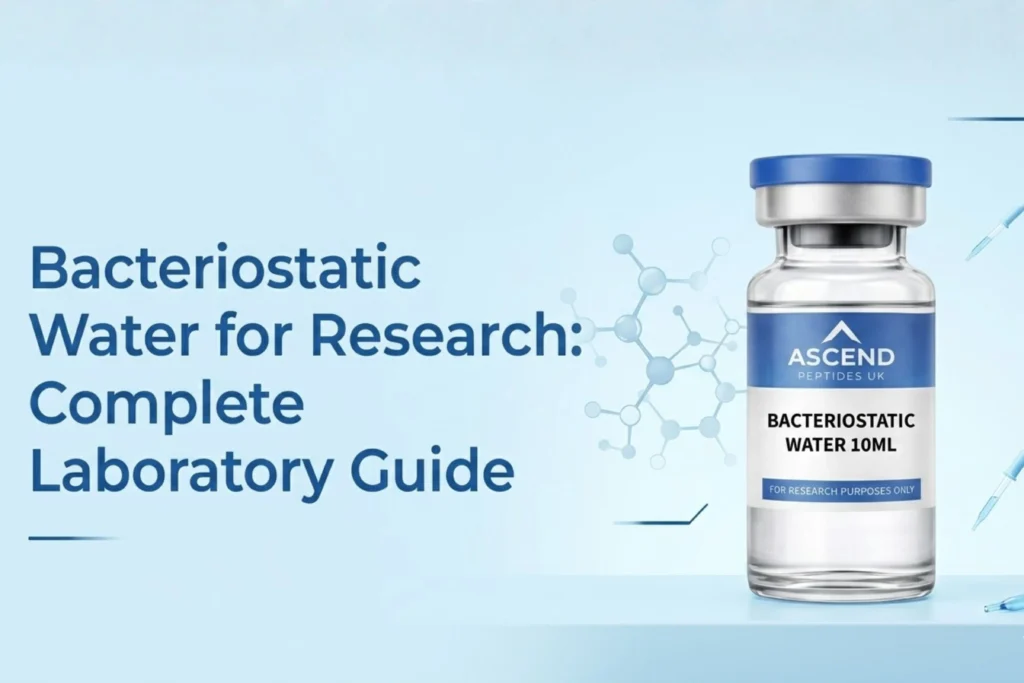
Ascend Peptides UK supplies sterile bacteriostatic water 10ML at £6.00 per vial alongside our complete range of research peptides, so researchers can source their peptide compounds and reconstitution solvent from a single trusted UK supplier. Same-day dispatch is available for orders placed before 4pm, free shipping on orders over £50, and bacteriostatic water is included free with any order over £75.
What Is Bacteriostatic Water?
Bacteriostatic water is sterile, non-pyrogenic water that contains 0.9% benzyl alcohol as a preservative. The term “bacteriostatic” describes the preservative’s function precisely: benzyl alcohol inhibits or “static-blocks” the growth of bacteria in the solution, preventing microbial proliferation without necessarily killing all organisms present. This bacteriostatic action is what allows the same vial of water to be accessed multiple times using a needle and syringe under proper sterile conditions without compromising solution integrity.
This multi-dose capability is the single most important practical advantage bacteriostatic water holds over other sterile water preparations.
When working with lyophilised research peptides where a single reconstitution vial may need to be accessed repeatedly over days or weeks the ability to re-enter the bacteriostatic water vial multiple times is essential for both experimental economy and consistency.
Bacteriostatic Water: Quick Reference Specifications
|
Specification |
Detail |
|---|---|
|
Product name |
Bacteriostatic Water 10ML |
|
Preservative |
0.9% benzyl alcohol (USP-grade) |
|
Volume |
10ml per vial |
|
Format |
Multi-dose sealed vial |
|
Appearance |
Clear, colourless solution |
|
Pyrogenicity |
Non-pyrogenic |
|
Sterility |
Sterile — USP-grade |
|
Storage temperature |
Room temperature 20°C–25°C (68°F–77°F) |
|
Light sensitivity |
Protect from direct sunlight |
|
Intended use |
Laboratory research and peptide reconstitution only |
|
Price |
£6.00 per vial |
A Note on Benzyl Alcohol: Safety in Research Contexts
Benzyl alcohol at 0.9% concentration is the established, USP-standard preservative used in bacteriostatic water preparations. In laboratory research contexts where the water is used to reconstitute compounds for in vitro assays or controlled in vivo studies this concentration is well within the range used in decades of published research.
Researchers should be aware, however, that benzyl alcohol is toxic to neonates and newborn animal models when administered in significant volumes.
Any research protocol involving neonatal animal models should account for this and consider using preservative-free sterile saline as an alternative reconstitution solvent.
For standard in vitro cell culture and adult animal research, bacteriostatic water with 0.9% benzyl alcohol is the appropriate and widely accepted choice.
Why Bacteriostatic Water and Not Ordinary Sterile Water?
This is the most common question researchers new to peptide work ask and it has a clear, scientifically grounded answer. The difference between bacteriostatic water and standard sterile water for injection is not just the presence of benzyl alcohol. It is the practical consequence of that difference in a real research setting.
Standard sterile water for injection contains no preservative. Once the sealed vial is punctured even with a sterile needle the absence of any bacteriostatic agent means that microbial contamination becomes possible from that point forward. This makes standard sterile water a single-use preparation only.
For researchers who need to prepare multiple aliquots from a single reconstitution, or who are working through a peptide vial over multiple experimental sessions, standard sterile water is simply not fit for purpose.
Bacteriostatic water, by contrast, maintains its antimicrobial protection across multiple accesses. The 0.9% benzyl alcohol concentration is specifically formulated to provide this protection while remaining compatible with the broad range of peptide compounds used in research settings.
This is why every reputable peptide reconstitution protocol across the published literature specifies bacteriostatic water as the primary solvent of choice for lyophilised research peptides, from growth factor compounds like IGF-1 LR3 1mg to recovery research peptides like BPC-157 10mg.Bacteriostatic Water vs Sterile Water vs Acetic Acid: Choosing the Right Solvent
Bacteriostatic water is the correct reconstitution solvent for most lyophilised research peptides but it is not the only option researchers encounter in the literature. Understanding when to use each solvent, and why, is an important part of good laboratory practice.
|
Property |
Bacteriostatic Water |
Sterile Water for Injection |
0.1M Acetic Acid |
|---|---|---|---|
|
Preservative |
0.9% benzyl alcohol |
None |
None |
|
Multi-dose use |
✓ Yes — preserved |
✗ Single use only |
✗ Single use only |
|
Post-reconstitution stability |
Up to 28 days at 4°C |
24 hours max |
24–48 hours at 4°C |
|
pH |
Neutral (~5.7) |
Neutral (~5.5) |
Acidic (~3.0) |
|
Best for |
Most lyophilised research peptides |
Single-use, pH-sensitive assays |
Low aqueous solubility peptides |
|
Compatible with |
IGF-1 LR3, BPC-157, TB-500, GHK-CU, CJC-1295, most peptides |
Short-duration cell assays |
Certain peptides with limited water solubility |
|
Available from Ascend |
✓ Yes — £6.00 / 10ml |
✗ Not stocked |
✓ Yes — acetic acid 10ml |
The practical guidance that follows from this comparison is straightforward. For the vast majority of lyophilised research peptides available from Ascend Peptides UK including TB-500 10mg, CJC-1295 Without DAC, GHK-CU, and the Melanotan series bacteriostatic water is the appropriate and preferred reconstitution solvent.
Acetic acid is occasionally used for peptides with limited aqueous solubility at neutral pH, and Ascend Peptides UK stocks acetic acid 10ml for researchers who require it. Standard sterile water for injection is not stocked, as its single-use limitation makes it unsuitable for most peptide research workflows.
How to Use Bacteriostatic Water for Peptide Reconstitution
Correct technique when using bacteriostatic water for research peptide reconstitution is essential for preserving compound integrity and ensuring consistent experimental results. This section is provided for general laboratory reference and does not constitute dosing, medical, or clinical guidance.
Step-by-Step Reconstitution Protocol
The bacteriostatic water vial itself should be stored at room temperature (20°C–25°C) and protected from direct sunlight. Once punctured, the benzyl alcohol preservative maintains antimicrobial protection across multiple accesses; however, best practice is to use the vial within a reasonable timeframe and discard if any change in appearance is observed.
One additional note for researchers working with copper-chelating compounds such as GHK-CU 50mg always swirl gently rather than shaking after adding bacteriostatic water, as vigorous agitation can disrupt the copper-peptide coordination complex and compromise experimental consistency.
The same gentle handling applies to metabolic research peptides such as AOD-9604 where maintaining peptide structural integrity during reconstitution directly affects downstream assay reliability.
Which Research Peptides Require Bacteriostatic Water?
Bacteriostatic water is the recommended reconstitution solvent for the majority of lyophilised research peptides available from Ascend Peptides UK.
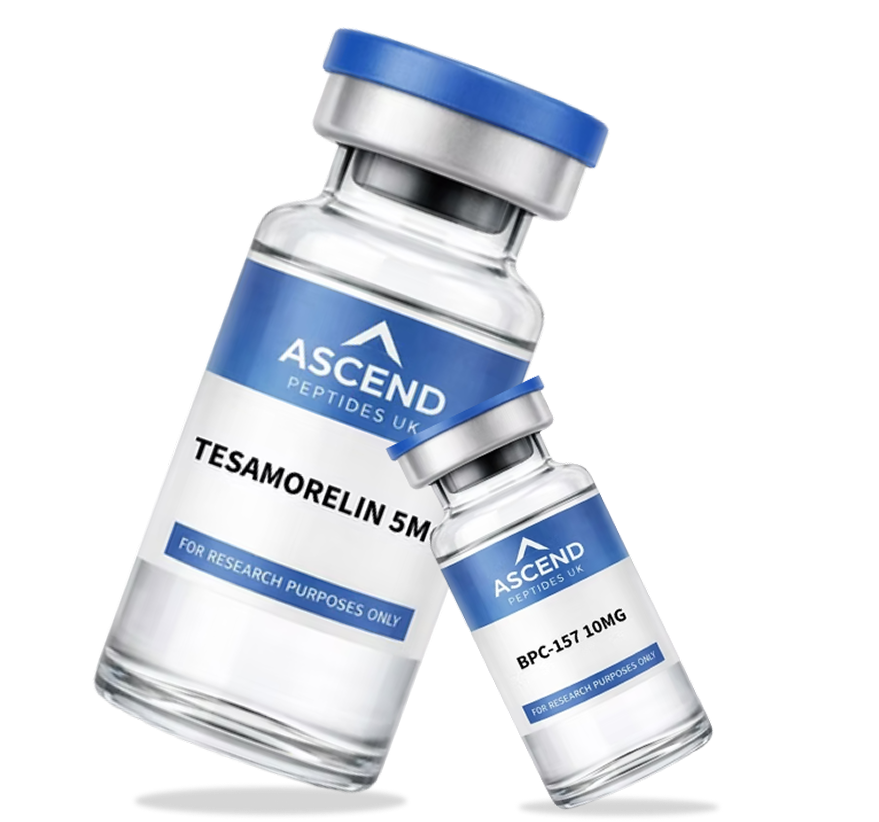
The table below provides a quick reference for researchers working across multiple peptide compounds. Growth hormone peptides such as Tesamorelin 10mg follow the same protocol as all other compounds listed: slow addition down the vial wall, gentle swirling, and immediate aliquoting into single-use volumes stored at -20°C.
|
Research Peptide |
Recommended Solvent |
Post-Reconstitution Storage |
Bacteriostatic Water Compatible? |
|---|---|---|---|
|
IGF-1 LR3 1mg |
Bacteriostatic water |
-20°C aliquots |
✓ Yes — preferred |
|
BPC-157 10mg |
Bacteriostatic water |
-20°C aliquots |
✓ Yes — preferred |
|
TB-500 10mg |
Bacteriostatic water |
-20°C aliquots |
✓ Yes — preferred |
|
GHK-CU 50mg / 100mg |
Bacteriostatic water |
-20°C aliquots |
✓ Yes — preferred |
|
CJC-1295 Without DAC |
Bacteriostatic water |
-20°C aliquots |
✓ Yes — preferred |
|
MT-1 10mg |
Bacteriostatic water |
-20°C aliquots |
✓ Yes |
|
MT-2 10mg |
Bacteriostatic water |
-20°C aliquots |
✓ Yes |
|
AOD-9604 5mg |
Bacteriostatic water |
-20°C aliquots |
✓ Yes |
|
Ipamorelin 10mg |
Bacteriostatic water |
-20°C aliquots |
✓ Yes |
|
Tesamorelin 10mg |
Bacteriostatic water |
-20°C aliquots |
✓ Yes |
Each of the research peptides listed above has its own dedicated scientific guide covering mechanism of action, receptor pharmacology, research applications, and detailed reconstitution protocols. Researchers are encouraged to consult the individual compound guide before beginning any experimental work.
IGF-1 LR3 1mg — IGF-1 LR3 1mg: The preferred growth factor research peptide for cell culture and receptor signalling studies. Bacteriostatic water is the standard reconstitution solvent referenced across the published IGF-1 LR3 literature.
BPC-157 10mg — BPC-157 10mg: One of the most widely studied recovery research peptides. Bacteriostatic water reconstitution is standard practice for BPC-157 in published laboratory protocols.
TB-500 10mg — TB-500 10mg: The actin-binding research peptide studied in cytoskeletal and cellular migration research. Bacteriostatic water is the most commonly used solvent for TB-500 reconstitution in laboratory settings.
GHK-CU 50mg — GHK-CU 50mg: The copper-binding skin research peptide. Bacteriostatic water is the recommended solvent. Importantly, gentle swirling only should be used during reconstitution to preserve the copper-peptide coordination complex.
CJC-1295 Without DAC — CJC-1295 Without DAC: The growth hormone releasing hormone analogue studied in GHRH receptor research. Bacteriostatic water is the standard reconstitution solvent used in published CJC-1295 Without DAC experimental protocols.

Sourcing Bacteriostatic Water for Research in the UK
Not all bacteriostatic water preparations are equivalent. For laboratory research use, the quality and specification of the solvent matters both for the integrity of your reconstituted peptide compounds and for the reliability of your experimental results. When sourcing bacteriostatic water in the UK, look for the following:
-
USP-grade: The United States Pharmacopeia (USP) standard for bacteriostatic water is the benchmark quality reference used in research and compounding environments internationally. Ensure the product explicitly states USP-grade.
-
0.9% benzyl alcohol: This is the correct and established preservative concentration. Products with different benzyl alcohol concentrations, or alternative preservatives, may not provide equivalent multi-dose protection or peptide compatibility.
-
Non-pyrogenic: Pyrogens are fever-inducing contaminants critically important to exclude in any research preparation. Non-pyrogenic certification should be explicitly stated.
-
Sealed multi-dose vial format: The vial should arrive factory-sealed. The rubber septum must be intact and undamaged to ensure sterility at first use.
-
Clear product labelling: Research-only designation, ingredient list, and storage instructions should all be clearly stated on the label.
-
UK-based supplier: Sourcing from a UK-based bacteriostatic water supplier reduces transit time and associated stability risks. Same-day dispatch is available from Ascend Peptides UK for orders placed before 4pm.
Ascend Peptides UK supplies sterile bacteriostatic water 10ML meeting all of these specifications. At £6.00 per vial, it is available as a standalone purchase or as a free addition to orders over £75 making it easy for researchers to source their bacteriostatic water alongside their peptide compounds in a single order with same-day UK dispatch.
Order bacteriostatic water for research at Ascend Peptides UK, or explore our complete range of research peptides and laboratory supplies.

Why Researchers Choose Ascend Peptides UK for Bacteriostatic Water
Ascend Peptides UK is a dedicated research peptides and laboratory supplies company built specifically to serve UK laboratories, research institutions, and scientifically engaged individuals.
Our bacteriostatic water for research is one part of a complete supply ecosystem designed so that researchers can source everything they need peptide compounds and reconstitution solvents alike from a single trusted UK supplier.
-
USP-grade, sterile, non-pyrogenic: Every specification a research laboratory requires, confirmed before dispatch.
-
0.9% benzyl alcohol preservative: The correct multi-dose formulation compatible with the broad range of research peptides in our catalogue.
-
UK-based lab supply distributor: Same-day dispatch for orders placed before 4pm, with free shipping on orders over £50.
-
Free with orders over £75: Researchers ordering research peptide compounds above the threshold receive bacteriostatic water 10ML at no additional cost reducing the per-experiment supply cost for active programmes.
-
Free shipping over £50: All UK orders above £50 ship free, with same-day dispatch for orders placed before 4pm.
-
Complete research supply range: Bacteriostatic water, acetic acid, and the full portfolio of research-grade peptides all from one UK source.
Whether you are a laboratory scientist reconstituting your first lyophilised peptide or a research institution maintaining a regular supply of bacteriostatic water for ongoing programmes, Ascend Peptides UK provides the reliability, quality, and UK-based logistics that research work demands.
Conclusion: Why Bacteriostatic Water Is a Research Essential
Bacteriostatic water for research is not a complex product but it is an indispensable one. Its combination of sterility, non-pyrogenicity, and benzyl alcohol-based multi-dose preservation makes it the correct and standard solvent for reconstituting lyophilised research peptides across virtually every category: growth factor peptides, recovery peptides, skin research peptides, growth hormone peptides, and the Melanotan series. No other readily available solvent matches this combination of properties for routine peptide research work.
For UK researchers who want to source their bacteriostatic water and their research peptide compounds from a single, reliable, same-day dispatch UK supplier, Ascend Peptides UK provides exactly that.
Frequently Asked Questions About Bacteriostatic Water for Research
Q: What is bacteriostatic water used for in research?
A: Bacteriostatic water is used in research laboratories as the primary solvent for reconstituting lyophilised (freeze-dried) research peptides. It is sterile, non-pyrogenic water containing 0.9% benzyl alcohol as a preservative, which allows the same vial to be accessed multiple times under sterile conditions. It is the standard reconstitution solvent referenced in published protocols for the majority of research peptides, including IGF-1 LR3, BPC-157, TB-500, GHK-CU, CJC-1295, and many others.
Q: What is the difference between bacteriostatic water and sterile water?
A: The key difference is the presence of 0.9% benzyl alcohol in bacteriostatic water. This preservative inhibits bacterial growth in the solution, making bacteriostatic water a multi-dose preparation meaning the same vial can be accessed with a sterile needle multiple times without compromising the solution. Standard sterile water for injection contains no preservative and must be treated as a single-use preparation once the vial is punctured. For peptide reconstitution in research settings, bacteriostatic water is almost always the appropriate choice.
Q: Is bacteriostatic water legal to buy in the UK?
A: Yes. Bacteriostatic water is legal to purchase in the United Kingdom as a laboratory and research supply. It is not a controlled substance. Ascend Peptides UK supplies bacteriostatic water 10ML strictly for laboratory research and compounding purposes. It is not intended for human or veterinary use outside of regulated laboratory settings.
Q: How do you use bacteriostatic water to reconstitute research peptides?
A: Using a sterile syringe and needle, draw the required volume of bacteriostatic water and inject it slowly down the inner wall of the lyophilised peptide vial — not directly onto the powder. Gently swirl or roll the vial to dissolve. Do not shake or vortex. Once dissolved, aliquot immediately into single-use volumes, store at -20°C, and protect from light. Always follow standard aseptic laboratory technique throughout the process.
Q: How long does bacteriostatic water last after opening?
A: Once the bacteriostatic water vial has been punctured, the 0.9% benzyl alcohol preservative maintains antimicrobial protection across multiple accesses. Best laboratory practice is to use an opened vial within 28 days and discard if any change in appearance — cloudiness, discolouration, or particulate matter is observed. Store at room temperature (20°C–25°C), protected from direct sunlight, with the septum kept as intact as possible between uses.
Q: What concentration of benzyl alcohol does bacteriostatic water contain?
A: Research-grade bacteriostatic water contains 0.9% benzyl alcohol (w/v) as the preservative. This is the standard USP-grade concentration for bacteriostatic water used in laboratory, research, and compounding environments. Ascend Peptides UK bacteriostatic water 10ML meets this specification.
Q: Can bacteriostatic water be used with all research peptides?
A: Bacteriostatic water is compatible with and recommended for the vast majority of lyophilised research peptides, including growth factor peptides, recovery peptides, growth hormone peptides, skin research peptides, and the Melanotan series. A small number of peptides with limited aqueous solubility at neutral pH may require 0.1M acetic acid as an alternative solvent. Always consult the individual peptide’s reconstitution guidance before proceeding.
Q: How should bacteriostatic water be stored?
A: Bacteriostatic water should be stored at controlled room temperature between 20°C and 25°C (68°F–77°F). Keep the vial tightly sealed when not in use and protect from excessive heat, freezing, and direct sunlight. Do not refrigerate or freeze the bacteriostatic water vial itself — only the reconstituted peptide aliquots prepared using it should be stored at -20°C.
Q: Where can I buy bacteriostatic water for research in the UK?
A: Bacteriostatic water 10ML is available from Ascend Peptides UK at £6.00 per vial. We are a UK-based laboratory supplies and research peptides company offering same-day dispatch for orders placed before 4pm, free shipping on orders over £50, and free bacteriostatic water with orders over £75. All products are supplied for laboratory research use only.
Q: What is the molecular weight of benzyl alcohol in bacteriostatic water?
A: Benzyl alcohol (C7H8O) has a molecular weight of 108.14 g/mol. At the 0.9% concentration present in research-grade bacteriostatic water, it provides effective bacteriostatic preservation while maintaining compatibility with the peptide compounds it is used to reconstitute. This concentration has been the established standard in USP-grade bacteriostatic water preparations for decades.
Q: Is bacteriostatic water safe to use with research peptides?
A: Yes. Bacteriostatic water containing 0.9% benzyl alcohol is the established, USP-standard solvent for reconstituting lyophilised research peptides and has been used in published laboratory protocols for decades. The benzyl alcohol concentration is compatible with the vast majority of research peptides across all categories. One important exception: benzyl alcohol is toxic to neonates and newborn animal models at significant volumes. Researchers conducting studies in neonatal animal models should use preservative-free sterile saline as an alternative reconstitution solvent.
Q: Does Ascend Peptides UK offer free bacteriostatic water?
A: Yes. Ascend Peptides UK includes bacteriostatic water 10ML free of charge with any order over £75. This means researchers ordering research peptide compounds above the threshold receive their reconstitution solvent at no additional cost. Bacteriostatic water is also available as a standalone purchase at £6.00 per vial, with free shipping on all orders over £50 and same-day dispatch for orders placed before 4pm.
DISCLAIMER
All products supplied by Ascend Peptides UK are intended strictly for research purposes only. They are not intended for human consumption or for any therapeutic, diagnostic, or clinical use. None of the items offered are classified as medicinal products by the MHRA. It is the buyer’s responsibility to ensure all purchases comply with applicable laws and regulations. Ascend Peptides UK accepts no liability for misuse.